Clay & Concrete Tile Roofing
Clay & Concrete Tile. The 100-Year Roof
Clay and concrete tile roofing installation, repair, and replacement in the East Bay.. Free structural assessment. Call (925) 722-4916.
Call (925) 722-4916 NowTile Roofing in the East Bay
East Bay Roofers is the East Bay's licensed roofing contractor that homeowners call for clay and concrete tile roofing Since 1988, we've installed clay and concrete tile roofs across the East Bay. Here's what that looks like in practice:
Fireproof: Class A
Clay and concrete tiles are non-combustible. They won't ignite from embers, radiant heat, or direct flame. Essential for East Bay WUI zones.
Natural Insulation
The air gap between tile and decking creates a thermal break that reduces cooling costs by 20-30% in East Bay summers.
50-75 Year Lifespan
Clay and concrete tiles don't degrade from UV, moisture, or temperature cycling. Color is integral, it won't fade, chip, or wear off.
Fully Recyclable
Tiles can be removed, stored, and reinstalled during underlayment replacement. At end of life, they're ground into aggregate, zero landfill waste.
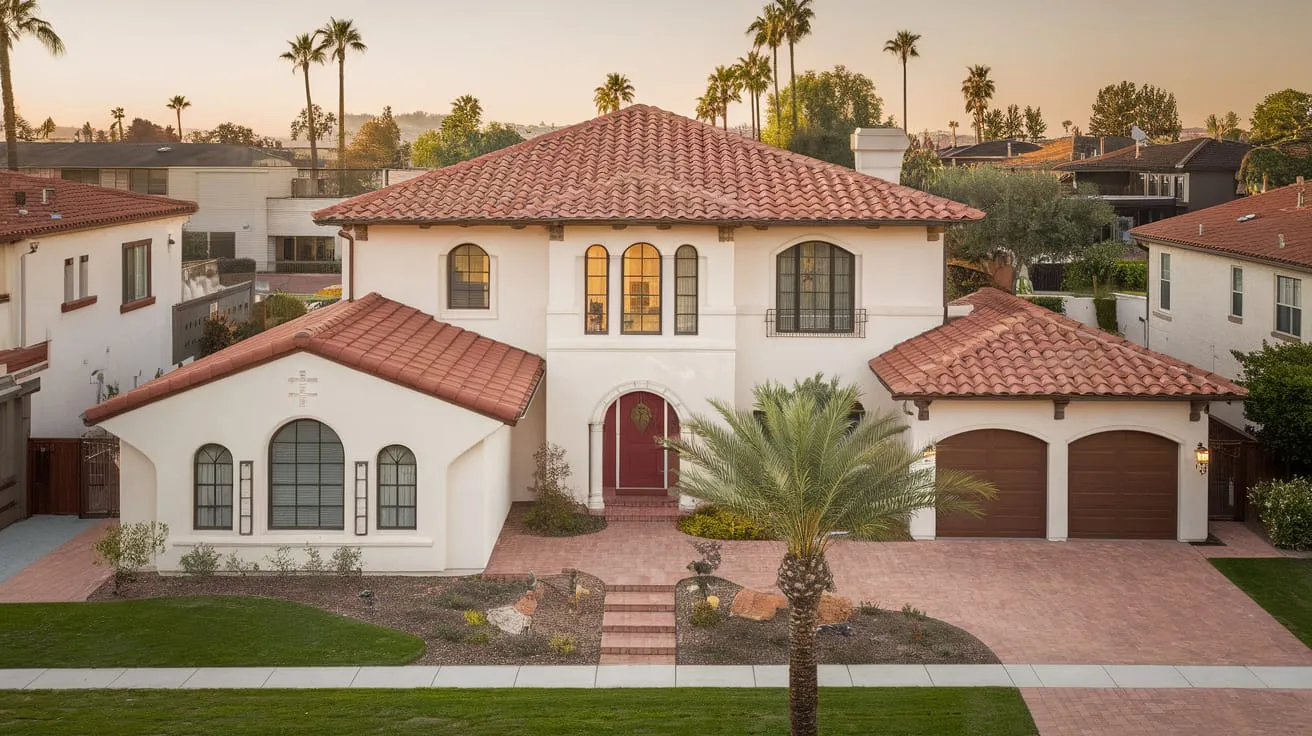
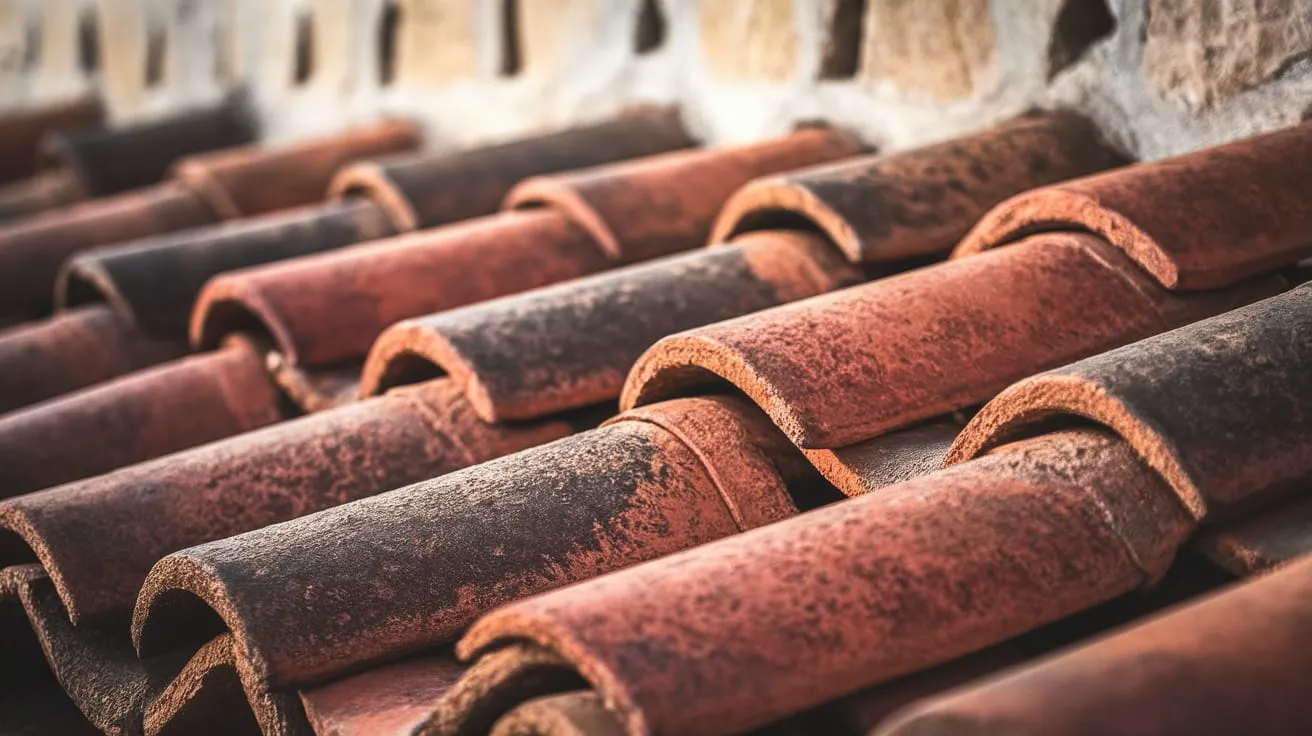
What Is Tile Roofing
Roofing tile is either fired clay or high-pressure concrete. Clay tile is extruded or hand-shaped, kiln-fired at around 2,000°F, and the color is a product of the clay body itself plus any slip or engobe applied before firing. Concrete tile is Portland cement, sand, and pigment, vibrated or extruded into a mold and cured. Both products get installed over battens or direct-to-deck, lap each other in a way that sheds water off the face of each piece, and rely on an underlayment below for the actual watertight seal.
Clay runs roughly 950 pounds per roofing square. Concrete lands around 900 pounds per square. Asphalt shingle — for comparison — is about 240 pounds per square. You can see the framing issue coming. Brands we install: Boral (now Westlake Royal) Saxony, Villa, and Barcelona profiles. Eagle Roofing's Malibu, Capistrano, Bel Air, and Golden Eagle lines — Eagle is headquartered in Rialto and we can get their stock in 48 hours for most East Bay jobs. MCA Clay Tile with the Corona Tapered Mission profile when a customer wants genuine Mexican clay. Redland and US Tile for price-point jobs. We'll also relay salvaged original tile when we're restoring an older Piedmont or Berkeley home where matching the existing profile matters more than anything else.
When Tile Makes Sense (and When It Doesn't)
Tile is the right call when three things line up: the architecture calls for it, the framing can handle the weight or can be reasonably reinforced, and you're planning to own the home long enough to get your money back on the upgrade.
A Mediterranean or Spanish Colonial in Alamo, Orinda, Danville, Walnut Creek, or Piedmont with original framing already sized for tile — that's an easy conversation. You're replacing the underlayment and maybe 5 to 15% of broken tiles, keeping the rest, and you'll have a roof that outlives the rest of the house. Here's my honest stance: tile isn't better than asphalt for every home. If your framing can't handle the weight without a substantial structural upgrade, and you're planning to sell inside five years, you won't get that money back. If your home is a 1970s tract in Antioch designed for composition, adding tile means sistering rafters, upgrading the ridge beam, and possibly engineering the load path down to the foundation. That's $15,000 to $30,000 of structural work on top of the roof. I'd put a quality architectural shingle up there instead and we'd both be happier. The other place tile falls down is on low-slope roofs. Anything under 4:12 pitch, water moves too slowly and wicks under the headlaps. Tile wants 5:12 or better, minimum.
Brands and Product Lines We Install
Boral / Westlake Royal Saxony — our default concrete tile.
Wide color palette, clean S-profile or flat options, consistent dimensional tolerance so the courses lay out straight. Fifty-year limited warranty. Boral Villa — the flat profile version, popular for Craftsman and transitional homes in Walnut Creek and Lafayette where the homeowner wants a slate-like look at a fraction of the cost. Eagle Roofing Malibu and Capistrano — Eagle is a California manufacturer, which matters for supply chain reliability and for the color-matched ridge and rake pieces. Bel Air is their premium flat tile, Capistrano is the classic two-piece mission profile. MCA Clay Tile Corona Tapered Mission — when the job calls for real clay in the two-piece barrel profile, MCA is who we specify. It's more expensive, it's heavier, and it looks right on a 1920s Spanish Colonial in a way concrete never quite matches. Redland and US Tile — we'll still install these when price is the controlling factor and the customer wants the performance floor without the premium aesthetics.
The Installation Process
Structural verification happens before we order material. If the home has tile on it already, we're usually fine — we'll pull a few tiles, inspect the underlayment and the framing from the inside, and confirm. If we're going from composition to tile, we're sending plans to a structural engineer for a load letter. Contra Costa County and Alameda County both want to see that letter in the permit package when the material weight is increasing significantly.
Tear-off is a careful operation on a relay job — we're stacking and storing the existing tile, discarding broken pieces, sweeping the deck clean, and inspecting every square foot of sheathing before we roll underlayment. For new tile, we're tearing off the existing shingle assembly, replacing any soft or delaminated sheathing, and installing new peel-and-stick or high-temp synthetic underlayment. Underlayment is where I'll spend more of your money than you expect, and I'll defend it every time. For tile, the underlayment IS the waterproofing — the tiles themselves shed maybe 90 to 95% of the water, and the rest has to be handled by what's underneath. We run a three-tier system: standard 30-pound felt was the old default, but we've moved almost entirely to Tri-Flex XT synthetic or Titanium UDL50 for most jobs, and full peel-and-stick (GAF StormGuard or similar self-adhered membrane) on the valleys, headwalls, and the first six feet of the eaves. On Chapter 7A jobs in the fire zones, we're running peel-and-stick across the full field. Battens versus direct-to-deck depends on the profile and the pitch. High-profile S-tile and barrel tile sit better on battens — the air gap behind them is part of why tile roofs run 20 to 30% cooler than shingle. Flat tile can go direct-to-deck with a nailable underlayment. Ridge tiles are either mortared in the traditional method or mechanically fastened with a Boral RidgeMaster system — we'll do either, and mechanical is our default for new installations because mortar cracks and you end up doing ridge work at year 15. Kick-out flashing at every wall termination, headwall flashing tied to the wall counter-flashing, and valley metal sized for the actual drainage area. Flashings on a tile roof are 80% of the leak prevention.
Code Requirements in the East Bay
CRC R905.3 covers clay and concrete tile.
Slope minimums (2.5:12 with double underlayment, 4:12 for single layer), fastener type, underlayment spec. R908.1 restricts overlays on tile — in most cases you're not overlaying tile, you're pulling it, re-underlaying, and relaying. Chapter 7A applies in every VHFHSZ zone, which covers almost all the hillside premium tile markets — Orinda, Lafayette, Moraga, Alamo, the Oakland and Berkeley hills, upper Walnut Creek. Tile is naturally Class A, so the material checks that box automatically, but the assembly still needs Chapter 7A-compliant underlayment, bird-stop at the eaves, and ember-resistant vents. Structural is the one that surprises people. Contra Costa County and the City of Oakland will both ask for an engineered letter when you're changing material weights. Budget $450 to $900 for that letter. If the framing needs reinforcement, we coordinate with the engineer and roll the work into the project.
East Bay Cities Where Tile Works Best
Alamo — classic tile market. Spanish Colonials, Mediterraneans, and custom estates with framing already sized for it. HOAs in Roundhill and Stone Valley generally require tile or approved equivalents. Orinda, Lafayette, Moraga — Mediterranean and Tudor stock, heavy tile presence, hillside microclimates where the thermal mass matters. Danville and Blackhawk — premium tract and custom homes, HOAs that specify tile profiles, framing built for it from the start. Walnut Creek hills — Northgate, Walnut Heights, Saranap — lots of tile stock that needs relays rather than full replacements. Piedmont — historic estates where matching or preserving original clay tile is the whole job. Flatland Antioch, Brentwood, and Concord tract homes? Usually the wrong answer.
Not because tile doesn't work there — it does — but because the math rarely pencils out when you're adding the structural cost and you're not recouping the premium on resale.
Related Work We Handle
Tile roofing doesn't exist in isolation. Storm damage from Diablo wind events — lifted tile, cracked field pieces, failed valley metal — often brings us to a roof that also needs a roof inspection to assess the broader underlayment condition. Commercial roofing properties with courtyard or mission-style architecture sometimes specify clay tile on parapeted low-slope sections, where we handle both the tile field and the flat membrane in the same scope. And when homeowners decide tile isn't the right move, we cover the full range of alternatives through our roof replacement and metal roofing services.
Ready to Talk Specifics
If you're considering tile for a new build a relay, or a full material upgrade, we'd rather start with a site visit than a phone bid.
We'll check the framing, the existing underlayment condition, the pitch, and the code overlay for your specific parcel, then write you a real estimate with real numbers. Call East Bay Roofers at (925) 722-4916, or request an estimate online. Founded 1988, C-39 licensed . We've been doing tile relays and new installs across Alamo, Danville, Orinda, Lafayette, Walnut Creek, and Piedmont since the first Bush administration.
What Tile Roofing Includes
Tile roofs fail when the details underneath fail. We replace damaged sheathing — plywood or osb — before a single tile goes down, then lay underlayment and ice-and-water shield in the valleys and first courses. Flashing at walls, valleys, and chimneys is done with corrosion-resistant metal, drip edge caps the eaves, and vent boot collars flash every pipe penetration. Ridge runs get ridge cap tiles bedded in mastic so wind can't lift them. The job meets building code for underlayment and flashing requirements, and the crew keeps a dumpster on site so broken tile and debris never pile up on the roof.
Roof System Details
Beyond the visible work, every tile roofing project on a roof touches the same system-level details. Valleys are flashed with corrosion-resistant metal so the heaviest water flow stays off the deck. Ice dams are addressed at the source — ice-and-water shield in the eaves and lower field plus balanced ridge vent and soffit vent airflow keeps the deck temperature even, so snowmelt doesn't refreeze at the eave and push water up under the shingles. The joist and rafter structure is checked for deflection before heavy materials go up. Gutter and downspout connections are confirmed at the eaves so the roof edge drains into the system instead of behind it — a roof and its gutters are one water-shedding assembly, and we treat them that way.
Quality & Materials Standards
Every material we install is specified to a standard, not just a price. Architectural shingles and three-tab shingle options are dimensional fiberglass-backed products with granulated mineral surfacing; standing-seam panel and corrugated panel metal roofs come in steel or aluminum with elastomeric coating options (including acrylic coating and silicone coating where the spec calls for them). TPO, EPDM, and built-up roof membranes are checked for tensile strength and coverage rate before they go up. Adhesive and roof cement are used where the membrane spec requires them, and fasteners are driven to the manufacturer's exact coverage rate — never guessed.
We also inspect for the failure modes that shorten roof life, and we're honest about what we find: blistering and blisters, buckling or warping, delamination and spalling, corrosion and erosion of metal, granulated loss, UV degradation, and deterioration that shows as flaking, cracking, or seepage at seams and eaves. Water that wicks up under a substrate rots sheathing and trusses; we fix the substrate, not the symptom. Drains, downspouts, and gutters are checked as part of the water path — a roof that drains is a roof that lasts.
Storm response is built into our process: hail damage and wind damage assessments document every dent, dislodged shingle, and lifted flashing for the adjuster. We handle claim documentation — including the deductible line items, depreciation schedules, and supplement paperwork insurance companies require — so the scope of work is approved before the crew arrives, and a tarp protects the interior until the permanent repair is scheduled. Crews work to a written scope of work with scaffold and safety harness protocols on every steep roof.
Need clay & concrete tile roofing in the East Bay? Get a free estimate from a licensed contractor.
Tile Roofing Costs
Concrete Tile
Flat or S-profile concrete tiles. 50+ year lifespan, wide color range, lighter than clay. Most cost-effective tile option.
Get Free EstimateStandard Clay Tile
Traditional barrel or flat clay tiles. Natural color that never fades. 75-100 year lifespan. The classic California look.
Get Free EstimateCustom/Imported Clay
Hand-made, imported, or custom-glazed clay tiles. Unique profiles and colors. Matched to historic or high-end architecture.
Get Free EstimateFrequently Asked Questions
Can my house support the weight of tile roofing?
That's the first thing we check. Clay tile weighs 600-1,100 lbs per square (100 sq ft), compared to 230-300 for asphalt shingles. Many East Bay homes need structural reinforcement, additional bracing, upgraded trusses, or sister rafters. We include a structural assessment in every tile roofing estimate and partner with licensed structural engineers when needed.
Are clay tiles better than concrete tiles?
Clay tiles last longer (75-100 years vs. 50+ for concrete), hold their color permanently (it's fired in, not surface-applied), and weigh slightly less. Concrete offers more color options, lower cost, and easier field-cutting. For most East Bay homes, concrete tile delivers 90% of the performance at 60% of the cost.
Can you match my existing tiles for a repair?
Usually yes. We maintain an inventory of discontinued tile profiles and have relationships with salvage suppliers. For common profiles (S-tile, flat tile, double Roman), we can almost always find a match. For rare or historic tiles, we can source custom runs from specialty manufacturers.
Do tile roofs require more maintenance than shingles?
Different maintenance, not necessarily more. Tiles themselves require almost zero maintenance, they don't rot, curl, or lose granules. The underlayment beneath the tiles lasts 20-40 years and will need replacement before the tiles do. Walking on tile roofs for maintenance should only be done by experienced crews who know where to step.
Get Your Free Roof Inspection
Call today for a no-obligation estimate from a licensed East Bay roofing contractor.
Call (925) 722-4916The Hidden Cost of Tile Roofing
The tiles last forever, but the underlayment beneath them doesn't. In 20-30 years, you'll need to remove all tiles, replace the underlayment, and relay the tiles, a project that costs $10,000-$20,000 even though the tiles are reused. Factor this into your lifetime cost calculation. Also, if your roof pitch is below 4:12, tile isn't appropriate, water moves too slowly and will find its way under the overlaps.
Related Services
Slate Roofing
Natural stone alternative for premium homes seeking the longest possible lifespan.
Learn MoreRoof Inspection
Tile-specific inspection assessing underlayment condition, broken tiles, and structural integrity.
Learn MoreWe Serve 38 East Bay Cities
From Concord to Fremont, Oakland to San Ramon — East Bay Roofers covers the entire East Bay with same-day emergency dispatch.