Jump to a section
- What you can see from the ground, and what it tells you
- Correcting gutter slope and hanger spacing during replacement
- Repair or replacement: the point where repair stops paying
- What a tear-off involves, and what a new roof includes beyond the shingles
- Choosing shingle, tile, or metal for the roof
- Rebuilding skylight, vent, and chimney flashings
- Flat and low-slope assemblies on commercial buildings
- Annual maintenance that preserves manufacturer warranty coverage
- Storm damage claim steps before signing a contract
- Checking crew, scope, and payment terms before hiring
- Where we work, and how to book a free estimate
What you can see from the ground, and what it tells you
Stand across the street and look at the roof line. Curling or missing shingles, granules collecting in gutters, and dark patches that stay wet after rain are the visible signals a homeowner can read without climbing.
Those signals do not tell you whether the deck is sound or whether the leak is at a flashing joint. That takes a closer look, and the findings should be written down so you can compare them with another estimate.
Correcting gutter slope and hanger spacing during replacement
Most interior leaks start at the edge, not in the middle of the field. A gutter that has pulled away from the fascia, a downspout that empties against the foundation, or a valley that dumps onto a lower roof sends water where it was not meant to go.
When you replace a roof, the gutter line is the moment to correct slope and hanger spacing. New gutters and downspouts are part of the scope on many jobs, and leaving old drainage in place undercuts the new roof above it.
Repair or replacement: the point where repair stops paying
A repair is the right spend when the failure is local: a lifted flashing, a cracked vent boot, a few wind-damaged shingles. It is the wrong spend when the same area leaks again after each storm, when shingles are brittle across the whole slope, or when the underlayment has reached the end of its service life.
Replacement costs more up front but stops the cycle of callbacks. If you have paid for the same leak twice in a season, ask for a replacement estimate alongside the repair quote and compare the two on paper.
What a tear-off involves, and what a new roof includes beyond the shingles
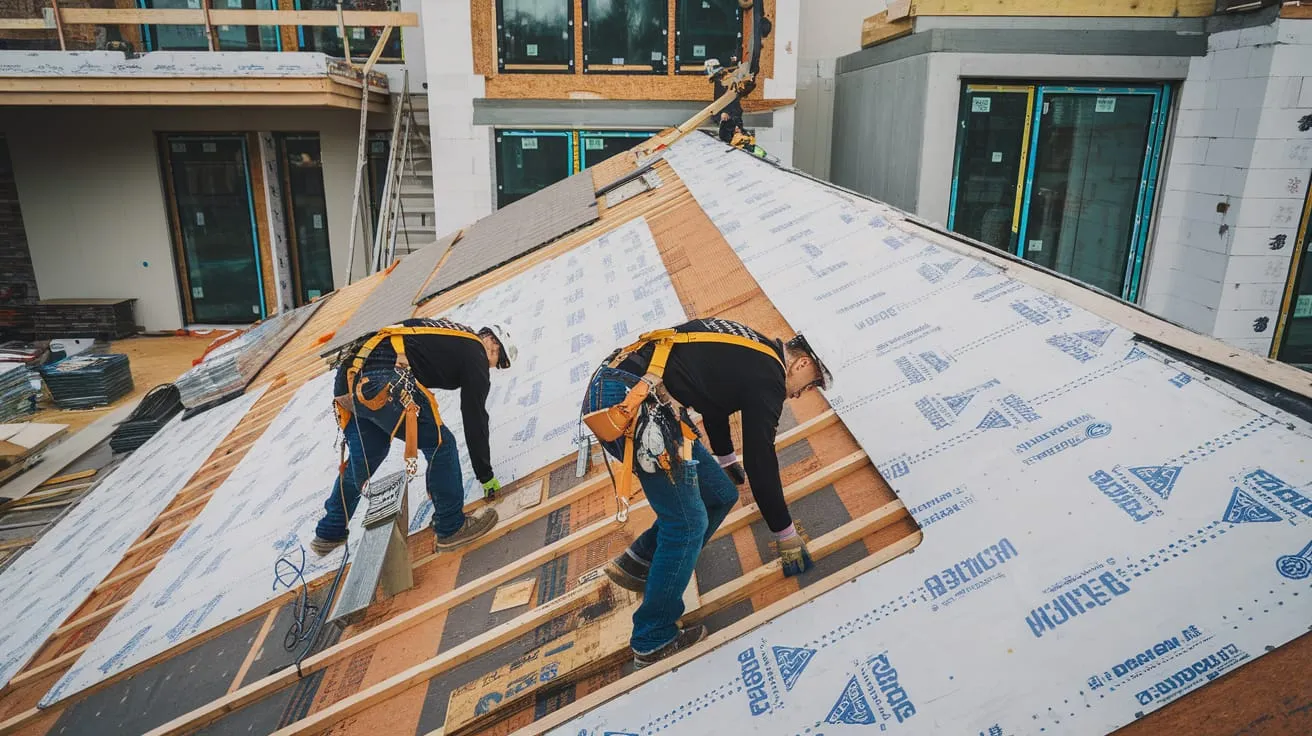
A tear-off removes the old roofing down to the deck. The crew inspects and replaces any soft sheathing, then installs underlayment, ice and water protection at valleys and eaves, and new flashing at chimneys, walls, and skylights before the first shingle goes down.
The roofing system is more than the visible layer. Ridge venting, drip edge, and pipe boots are part of the assembly, and a quote that lists only shingles is not describing the whole job.
Choosing shingle, tile, or metal for the roof
Shingle, tile, and metal each solve a different problem. Asphalt shingles cost less and install faster. Tile lasts longer but needs a structure that can carry the weight. Metal reflects heat and handles wind, at a higher material cost.
Manufacturer terms vary and are worth reading before you choose. GAF Timberline HDZ carries a UL 2218 Class 3 impact resistance statement on packages bearing that statement. Westlake Royal clay and concrete tile carries a 50-year limited, fully transferable warranty. Fabral Stand 'N Seam panels carry a 30-year paint-finish warranty against cracking, chipping, peeling, fading and chalking. Metal Roofing Systems System 1500 panels carry a 20-year weathertight warranty.
Rebuilding skylight, vent, and chimney flashings
Skylights, plumbing vents, and chimney flashings are where water finds its way in. The sealant around a curb cracks with sun and age, and the flashing metal can lift when the roof moves.
During a replacement, these joints are rebuilt rather than patched. Old skylights can be replaced with new units or framed out and roofed over, and the choice should be made before the tear-off starts.
Flat and low-slope assemblies on commercial buildings
Commercial and low-slope roofs use different assemblies from steep-slope residential work. Carlisle SynTec Sure-Weld TPO, fully adhered, carries a 5, 10, 15 or 20-year system warranty, and the term depends on the components in the assembly, not the membrane alone.
Property managers comparing bids should ask what is included in the assembly, not just the membrane. Insulation, cover board, and attachment method all affect the warranty term and the cost.
Annual maintenance that preserves manufacturer warranty coverage
Manufacturer warranties usually require that the roof be kept clear of debris and that problems be reported and repaired promptly. Annual maintenance is the work that keeps those terms intact.
A maintenance visit includes clearing gutters and drains, checking sealant at penetrations, and looking for lifted flashing. Small findings caught in the dry season cost less than the same findings after a storm.
Storm damage claim steps before signing a contract
When a storm damages a roof, the sequence matters. Document the damage with photos before any temporary repair, then call your insurer and open the claim. Keep the claim number and the adjuster's name.
A contractor can meet the adjuster on site and provide a written scope that matches what the insurer will cover. Do not sign a contract for the full replacement until the claim scope is agreed.
Checking crew, scope, and payment terms before hiring
Ask who will be on the roof. Crews that work directly for the contractor, rather than unknown subcontractors, are easier to hold to the scope and the schedule.
Before you sign, ask for the written scope, the payment schedule, and the start and completion dates. Financing is available for larger jobs, and the terms should be in writing before work begins. The published price range for this contractor is $450 to $45,000, which reflects the spread between small repairs and full replacements.
Where we work, and how to book a free estimate
East Bay Roofers works in Contra Costa County and Alameda County, including Concord, Walnut Creek, Danville, San Ramon, Pleasanton, Livermore, Dublin, Hayward, Fremont, Oakland, Berkeley, Richmond, Antioch, Brentwood, and the surrounding cities.
Call (925) 722-4916 or email info@eastbayroofers.com to book a free estimate. Hours are Monday to Friday 8am to 6pm and Saturday 9am to 5pm.