Slate Roofing
Natural Stone. 150-Year Heritage.
Natural slate roofing installation and repair in the East Bay. Genuine quarried slate, expert installation on historic and luxury homes.
Call (925) 722-4916 NowThe Roof That Outlives the House
Slate is the only residential roofing material I've ever pulled off a structure still fully functional. We did a restoration in Piedmont where the original 1908 Vermont slate had been on the house for 112 years. Ninety percent of the slates were still sound. The nails had rusted out, the copper flashings were tired, and the underlayment was dust, but the stone itself was ready for another century. That's the argument for slate in a single sentence, nothing else we install comes close to that kind of permanence.
That said, slate is the wrong answer for most East Bay homes, and I'll spend a fair amount of this page explaining why. If you're reading this because you own a historic property, are building a legacy home, or inherited a slate roof that needs restoration work, keep going. If you're weighing slate against architectural shingle on a 1980s tract home, I'd save you the read and point you elsewhere.
Natural Stone Beauty
No manufactured product replicates the depth, texture, and color variation of natural quarried slate. It's geological, not manufactured.
75-150 Year Lifespan
Vermont slate roofs installed in the 1870s are still performing. The material doesn't have a wear mechanism, it simply endures.
Non-Combustible
Stone doesn't burn. Class A rated without any coatings or treatments. Impervious to wildfire embers, critical for East Bay hillside homes.
Historic Fit
The correct material for Tudor, Victorian, and Colonial Revival restorations. Preservation boards and historic HOAs recognize it.
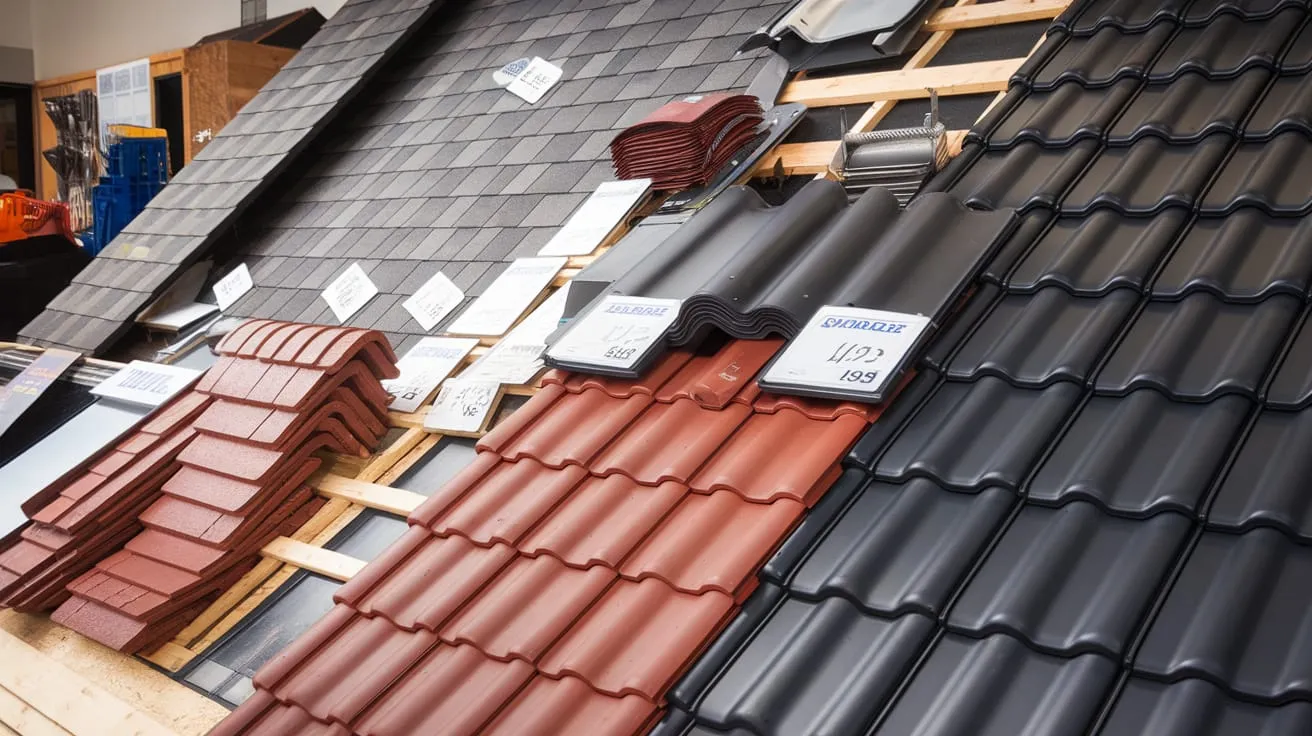
What Is Slate Roofing
Natural slate is metamorphic rock, shale compressed and recrystallized over 400 million years, quarried, split along its natural cleavage plane into thin pieces, and trimmed into roofing tiles. The best North American slate comes out of Vermont and eastern New York; the best European slate comes from Wales, Spain, and northern France. It's not manufactured. It's literally cut out of the earth.
Synthetic slate is something entirely different. DaVinci polymer slate is an engineered composite (virgin polymer, UV stabilizers, colorants) molded to replicate the face and edge of real slate. Brava is a similar composite, recycled content. EcoStar Majestic Slate is a rubber-and-plastic blend. Inspire Classic Slate is another polymer composite. These products weigh 250 to 400 pounds per square versus 700 to 1,500 for natural, cost 40 to 60% less, and last 30 to 50 years, solid products, but not the same thing as stone.
When Slate Makes Sense (and When It Doesn't)
Natural slate is the right call in three scenarios. First, historic preservation, if your home is a genuine Tudor, Victorian, or Colonial Revival in Berkeley's Elmwood, the Claremont district, old Oakland neighborhoods, or one of the Piedmont estates, and you're restoring rather than remodeling, the correct roof is the original material. Second, a generational build, if you're putting up a custom home in Alamo or Orinda and you want a roof that your grandchildren won't have to replace. Third, when the architecture is so specifically slate-dependent that nothing else reads right from the street.
Synthetic slate makes sense in a much wider range of scenarios. Anywhere you want the slate look without the structural and cost commitment. Any home where natural slate's weight would trigger $20,000 to $40,000 of framing reinforcement. Any project where a 40-to-50-year lifespan is sufficient and you'd rather put the savings into windows or insulation.
Here's my honest stance: natural slate is a 100-year commitment. Most East Bay homes are better off with synthetic slate unless you're in genuine historic preservation territory. I've talked more homeowners out of natural slate than into it, and I'm comfortable with that ratio. The product is magnificent. It's also wrong for most situations.
Brands and Product Lines We Install
Natural slate:
Vermont Structural Slate, the standard we specify on most North American slate projects. S1 grade, which is the classification that carries a 100-plus year expected life. Available in unfading gray, unfading black, unfading green, purple, red, and variegated purple. The Taconic Range quarries have been producing roofing slate since the 1850s, and the supply chain is reliable.
Greenstone Slate — Vermont quarry specializing in the green varieties (unfading green, sea green) plus gray and black. Their material has a tight dimensional tolerance that makes installation cleaner.
Sheldon Slate — smaller Vermont and Maine producer, premium grade, often used for matching existing historic roofs.
Synthetic slate:
DaVinci Roofscapes, our default synthetic. Polymer composite, 50-year warranty, Class A fire rating as part of the assembly, and a color palette that's been refined enough that even people who know slate have trouble calling it from the ground. Bellaforté Slate and Multi-Width Slate are the two most common product lines we install.
Brava Composite Slate, recycled polymer, Class A rated, similar weight and install characteristics to DaVinci. Good color selection.
EcoStar Majestic Slate, rubber-based composite, Class A rated in the Class A package, flexible enough to handle foot traffic better than most synthetics.
Inspire Classic Slate, polymer composite, strong fire rating, deep color options.
Installation Details
Slate installation, natural or synthetic, is a different craft from the rest of roofing. Natural slate especially has a set of rules that don't transfer from composition work.
Fasteners are copper or stainless steel, never galvanized, because you're installing a 100-year roof and galvanized fails in 30 to 40 years. Nails are driven flush, not countersunk, overdriving cracks the slate, underdriving creates a bump that cracks the course above. Each slate gets two nails, placed in pre-punched holes, positioned so the head lies under the next course.
Walking a slate roof is its own skill. The material is brittle under point loads, and you step on the lower third of each piece directly above the batten or nail line. Untrained roofers break tiles with every step, we've inherited more than one slate restoration project where the previous contractor did more damage than they repaired.
Cutting is done with a slate cutter or a wet diamond blade, never snapped. Valley slates, hip slates, and ridge slates all get measured and cut individually because no two pieces of natural stone are exactly identical.
Copper flashings are standard on natural slate. Lead-coated copper at the eaves, 16-ounce copper in valleys, copper soakers at sidewalls, the flashings are what fail first on a slate roof, usually at year 50 to 70, long before the slate itself shows wear.
Synthetic slate installs more like an architectural shingle. Standard nails, lighter weight, less individual-piece measurement. Faster install, lower installer skill threshold, but still requires attention to the headlap and the fastener pattern the manufacturer specifies.
Code Requirements in the East Bay
CRC R905.6 is the governing section for slate. Slope minimums (4:12 minimum, 8:12 preferred for optimal performance), headlap requirements, fastener specifications, and underlayment.
Structural capacity is the controlling issue. Natural slate runs 900 to 1,200 pounds per square for standard thickness, and thicker graduated-course slates can hit 1,500 pounds per square. Any East Bay jurisdiction. Contra Costa County, Alameda County, Oakland, Berkeley — will require an engineered letter showing the framing can handle the load if you're going from shingle to natural slate. Budget $500 to $1,000 for that letter. Most 1920s and earlier homes were framed for slate or tile and need minimal reinforcement. Post-1950 homes almost always need work.
Chapter 7A applies in the wildfire zones, and natural slate is inherently Class A — stone doesn't burn. The assembly still needs compliant underlayment, vents, and edge closures in VHFHSZ areas.
Synthetic slate products need to have their specific Class A assembly verified for the jurisdiction. DaVinci, Brava, EcoStar, and Inspire all have Class A listings, but the underlayment and installation pattern has to match the tested assembly. We verify this on every project.
Pricing and Timeline
Synthetic slate runs $1,200 to $2,200 per square installed. Natural slate runs $2,500 to $5,000 per square installed depending on species, origin, and complexity. For a typical East Bay home in the slate-appropriate markets, a synthetic slate re-roof lands $35,000 to $75,000 all-in, and a full natural slate installation can run $75,000 to $200,000 or more.
Timeline is longer than any other material we install. Synthetic slate on a 30-square home runs two to three weeks. Natural slate on a graduated-course historic restoration can take six to twelve weeks depending on scope, and the permit approval process alone can stretch to four weeks if there's a historic preservation review involved.
Lifespan: 75 to 150-plus years for natural slate, 30 to 50 years for synthetic. The natural slate math — spread the cost over 100 years — actually makes it competitive on a cost-per-year basis with two cycles of premium shingles. But you have to be willing to make a 100-year decision, and most people aren't.
East Bay Cities Where Slate Works Best
Piedmont — the highest concentration of genuine slate roofs in the East Bay. Historic estates, preservation-minded owners, framing often still adequate from the original build.
Berkeley Elmwood and Claremont. Victorian and Arts and Crafts homes where slate is original to the architecture.
Oakland Rockridge, Crocker Highlands, Upper Rockridge — pockets of slate stock, mostly restoration work.
Alamo and Danville — natural fit for custom estate builds and historic farmhouses, and a growing market for synthetic slate on architecturally ambitious new homes.
Historic downtown Alameda — Victorian stock with original slate, mostly restoration and matching work.
Frequently Asked Questions
How much does a slate roof cost in the East Bay?
Synthetic slate runs $1,200 to $2,200 per square installed, so $35,000 to $75,000 for a typical East Bay home. Natural slate runs $2,500 to $5,000 per square installed, so $75,000 to $200,000-plus for a full installation. Historic restoration with graduated courses, custom cuts, and copper flashings sits at the top of that range.
Should I choose natural or synthetic slate?
Synthetic slate (DaVinci, Brava, EcoStar, Inspire) is the right answer for most homeowners. It looks excellent from the ground, weighs a third of natural slate, costs 40 to 60% less, carries a 50-year warranty, and installs on standard framing. Natural slate is the right answer for historic preservation, generational homes, and architectural contexts where nothing else reads correctly.
Can my home support a natural slate roof?
Natural slate weighs 900 to 1,500 pounds per roofing square. Most homes built before 1940 were framed for slate or tile and can carry it with minimal reinforcement. Post-1950 tract construction framed for composition shingle (240 lbs/sq) usually requires structural upgrades — new ridge beams, sistered rafters, sometimes a reinforced load path. Budget $15,000 to $40,000 for structural work if you're retrofitting.
How long does a natural slate roof actually last?
S1 grade Vermont slate has a proven 100-to-150-year service life on thousands of existing installations. The flashings fail first — copper usually goes at year 50 to 70 and needs replacement while the slate continues. Expect to replace or refurbish copper flashings once or twice during the slate's lifetime. The stone itself has no meaningful wear mechanism.
Who can install or repair slate in the East Bay?
Very few contractors. Slate installation and repair is a specialty skill that doesn't transfer from shingle or tile experience. Ask specifically about the installer's slate history — not "we do all roofing" but actual slate projects completed. Our slate crews have a minimum of 10 years of slate-specific experience, and we don't cross-train shingle roofers onto slate projects.
What happens when a single slate breaks?
It's a 30-minute repair with a tool called a slate ripper. The broken slate is pulled, the old nails are cut, and a replacement slate is slipped into place and secured with a copper hook or a nail-and-bib. We keep an inventory of common slate types and sizes so we can match most historic and current installations on short notice.
Ready to Talk Specifics
Slate is a conversation best started in person. If you're restoring a historic East Bay home, planning a custom build, or evaluating whether synthetic slate is the right answer for an existing property, we'd like to walk the roof with you and talk specifics.
Call East Bay Roofers at (925) 722-4916, or request a consultation online. Founded 1988, C-39 licensed (CA #987654), GAF Master Elite and CertainTeed SELECT ShingleMaster certified, 4.9 out of 5 across 527 reviews. We've been handling slate restorations and new installations from Piedmont to Alameda to Berkeley's Elmwood for nearly four decades.
Slate Roofing Costs
Standard Slate
Vermont gray or black slate. Uniform thickness. Standard rectangular cut. 100+ year warranty from quarry.
Graduated / Textured
Multi-width installation with thick-to-thin graduation from eave to ridge. Textured surface. Historic appearance.
Imported / Custom
Welsh, Spanish, or Chinese slate. Custom colors (green, purple, red). Ornamental cuts and patterns. Museum-quality installation.
Frequently Asked Questions
Is natural slate worth the cost?
If you're building or restoring a home you plan to keep for generations, slate is the only roofing material that will outlast you, your children, and possibly your grandchildren. A 100-year-old slate roof with maintained flashing is still performing perfectly on thousands of homes. No other material can make that claim. On a per-year basis, slate is competitive with two shingle replacements.
Can my roof structure support slate?
Slate weighs 700-1,500 lbs per square depending on thickness. Most modern residential framing needs reinforcement. We work with structural engineers to assess and, if necessary, upgrade your roof structure before installation. This cost is included in our estimates.
What happens if a slate tile breaks?
Individual slates can be replaced without disturbing surrounding tiles using a tool called a slate ripper. We maintain inventory of various slate types and sizes for repairs. A broken slate is a 30-minute repair, not a crisis. The key is having a roofer who knows how to walk on slate without breaking more tiles.
Do you install synthetic slate?
We install both natural and synthetic (composite) slate. Synthetic products like DaVinci or EcoStar weigh 60-70% less, cost 40-50% less, and last 50+ years. They look excellent from ground level. If the natural stone experience and 100+ year lifespan aren't essential to you, composite slate is a compelling alternative.
Get Your Free Roof Inspection
Call today for a no-obligation estimate from a licensed East Bay roofing contractor.
Call (925) 722-4916Slate Isn't For Every Home
Slate requires structural capacity most homes don't have without reinforcement. It requires installers with specific slate experience, general roofers break tiles, use wrong fasteners, and create more damage than they fix. Repair and maintenance must also be done by slate specialists, limiting your contractor options. And if you're selling the house in 10 years, you won't recoup the cost differential over premium shingles. Slate is a generational investment, not a quick ROI play.
Related Services
Tile Roofing
Clay and concrete tile, another premium long-life material at lower cost than slate.
Roof Inspection
Slate-specific inspection by trained slate roofers who know what to look for.
Metal Roofing
Standing seam metal, 40-70 year life at roughly half the cost of natural slate.
We Serve 36+ East Bay Cities
From Concord to Fremont, Oakland to San Ramon — East Bay Roofers covers the entire East Bay.
View All Service Areas