Jump to a section
- What a roof inspection covers and what you get back
- The sequence from your call to the written findings
- How roof size and access set the inspection price
- What the steep-slope inspection checks and who returns
- Walking the membrane seams and drains on flat roofs
- Why most interior leaks begin at the roof edge
- Maintenance, warranty terms and what voids coverage
- Completed work: what to look at in the photos
- Reviews, service area and how to book
What a roof inspection covers and what you get back
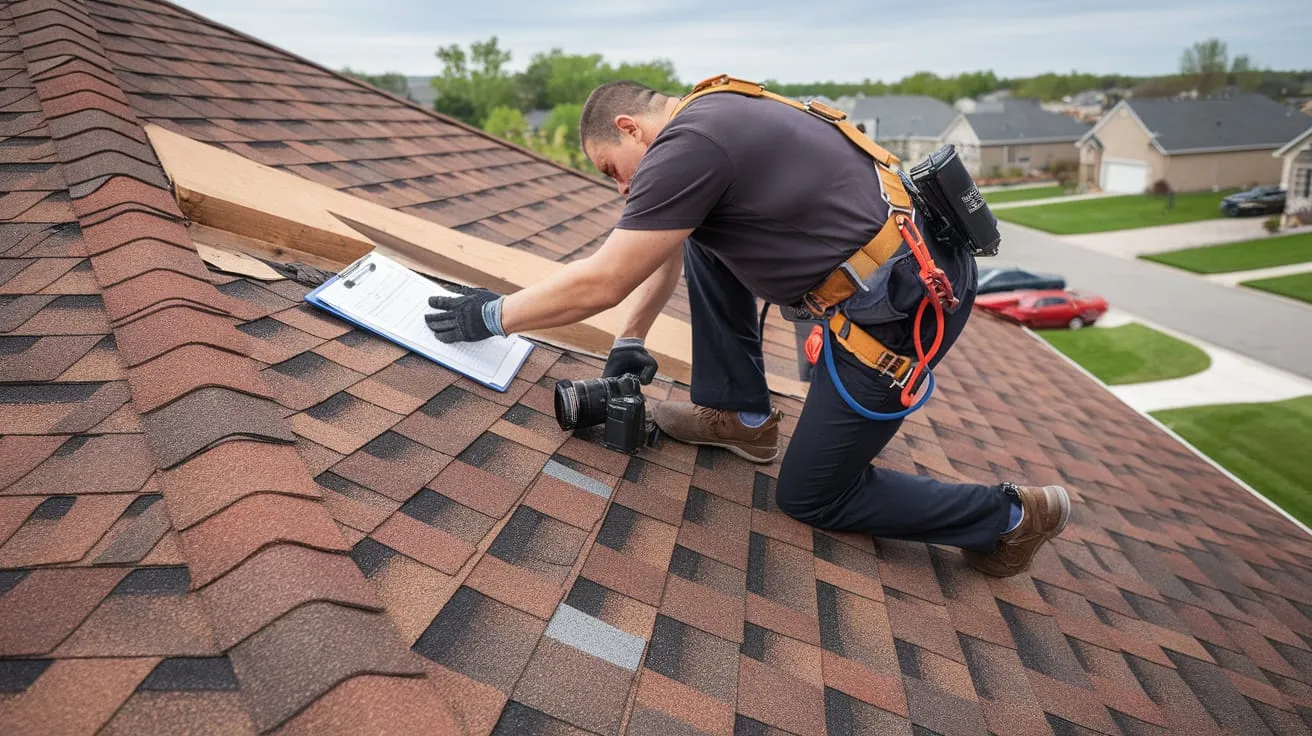
A roof inspection is a walk of the roof surface, the flashing, the roof sheathing at any soft spot, the gutter line and every roof penetration, followed by a written report. The report lists what was found, where it was found, and what each finding means for the near term. You get a document you can file, share with a property manager, or use to compare bids.
The visit covers shingles, tile or panel condition on steep-slope roofs, and membrane seams, drains and curbs on flat roofing. It covers flashing at walls, chimneys and skylights, and the gutter line where water leaves the roof. It does not cover what is inside a wall cavity, and it does not replace a structural engineer's report.
Findings are written so a reader who was not on the roof can follow them. Each item names the location, the material, and whether it is open, blistered, cracked, holding water or worn through. Photographs are attached to the item they describe, so you are not matching a picture to a paragraph.
The sequence from your call to the written findings
You call or email, describe what you are seeing, and book a window. We confirm the address, the roof type if you know it, and whether you have had a leak inside. The inspector arrives within the window, walks the roof, and photographs what is found.
Findings come back in writing. The report separates items that need attention now from items to watch. If a repair or replacement is recommended, the report says why, and you get an estimate for that scope. You are not asked to decide on the roof.
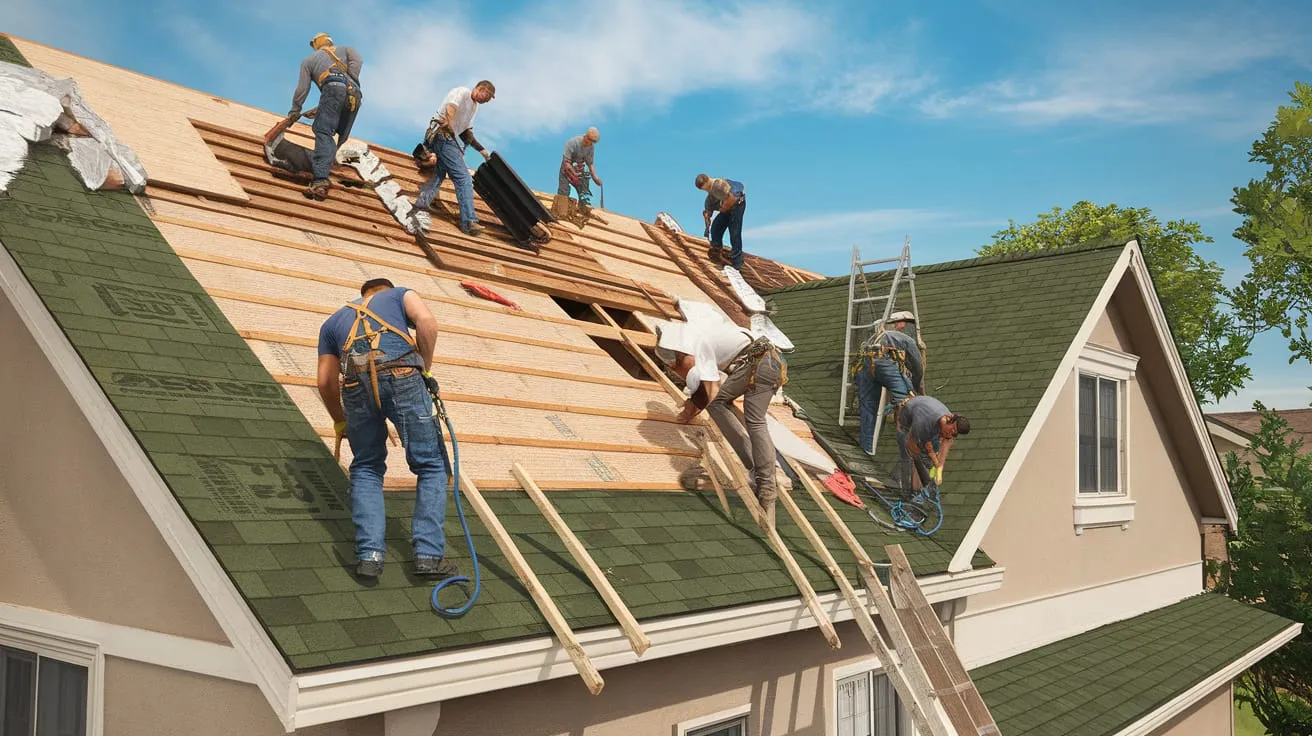
If the findings call for a repair, the same crew can schedule it. If they call for a roof replacement, the estimate breaks out the work beyond the visible surface and says whether a roof tear-off is needed or a roof overlay will hold, including underlayment, flashing and ventilation. You decide which path to take after you have the document in hand.
How roof size and access set the inspection price
Inspection cost depends on roof size, roof type, access and how many separate roof areas are involved. A single steep-slope roof on a house is a different visit from a commercial building with several flat roofing sections and parapets. Travel within the service area is part of scheduling, not a separate line.
Our published range for work across the company is $450 to $45,000. That range covers inspections through full replacements, so it is not an inspection price. You get a specific number for your address before anyone goes on the roof.
The cost of any follow-up work is quoted from the findings, not from a phone description. A repair priced from a description and a repair priced from a report are different numbers, and only the second one holds.
What the steep-slope inspection checks and who returns
On houses, the inspection looks at the shingle or tile field, the ridge and hip lines, the valley flashings and the step flashing where the roof meets a wall. It looks at the gutter line and the downspouts, because a roof that sheds water into a blocked gutter is a roof with a problem at the edge.
The crew that does residential work is the crew that does the repair or the install if you proceed. The same people who wrote the findings are on the roof for the follow-up work, which matters when a finding is small and the fix is small.
Wind damage on a steep-slope roof usually shows at the ridge, the rake edge and any lifted tab. The inspection records lifted or missing pieces by location, which is what an insurer asks for after a wind event.
Walking the membrane seams and drains on flat roofs
On commercial buildings the inspection walks the membrane, the seams, the drains and scuppers, the curb flashings and the penetrations. Flat roofing fails at the joints first: seam laps, pipe boots, rooftop unit curbs and the termination at the parapet. The report names each joint that is open, blistered or holding water.
Where the assembly is Carlisle SynTec Sure-Weld TPO, fully adhered, the system warranty term depends on the components in the assembly, not the membrane alone. That is why the inspection records what is actually installed, not what the building file says. If a warranty claim is possible, the findings support it.
Ponding water is recorded by area and depth of staining, not by guess. A drain that is clear but sitting high, or a scupper that is blocked by debris, is a finding a property manager can act on without a second visit.
Why most interior leaks begin at the roof edge
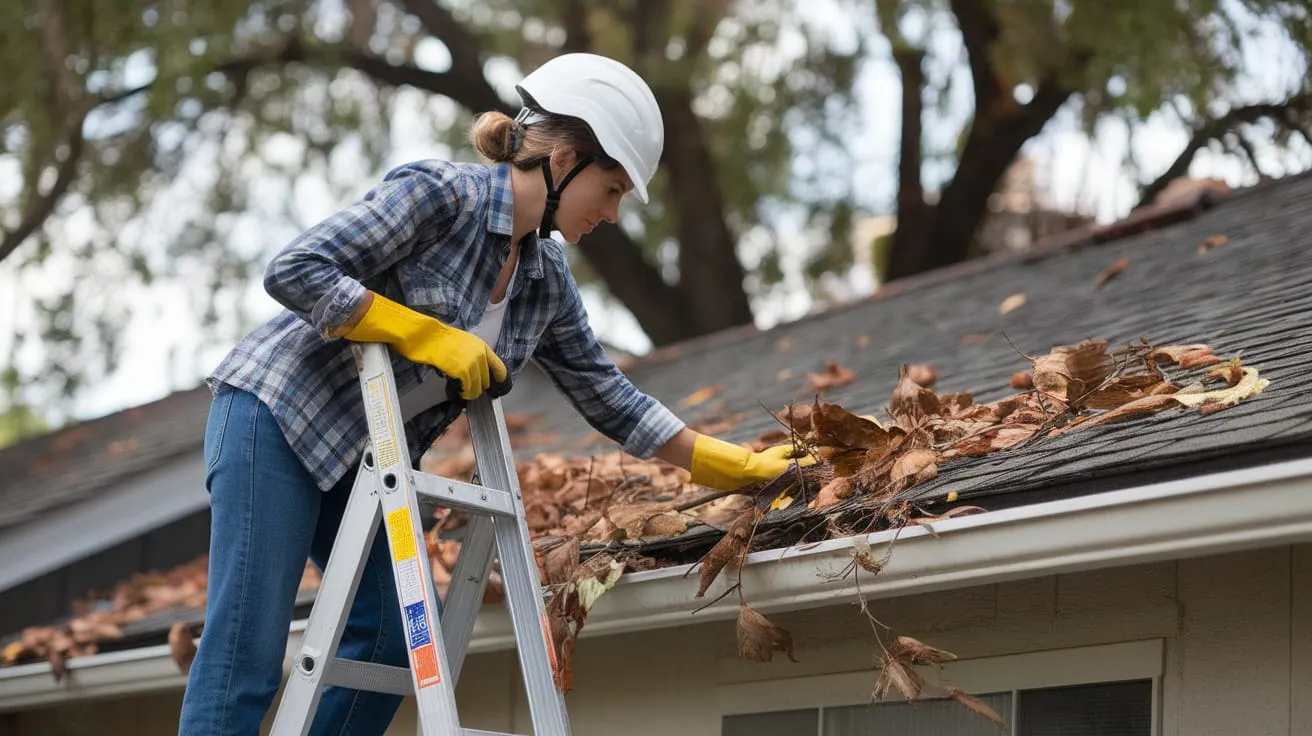
Most interior leaks we are called to start at the edge, not in the middle of the field. A gutter that has pulled away from the fascia, a downspout that discharges against the foundation, or a debris dam at a valley sends water sideways under the shingles or behind the siding. The inspection checks gutters and drainage as part of the roof, not as an afterthought.
Clearing gutters and confirming the downspouts carry water away is maintenance, and it is the cheapest item on most reports. It is also the item most often skipped between inspections.
A gutter that is undersized for the roof area it serves is a finding, not a repair. The report says so, and you can weigh a replacement against the cost of repeated interior repairs.
Maintenance, warranty terms and what voids coverage
Manufacturer warranties carry conditions. Westlake Royal clay and concrete roof tile carries a 50-year limited, fully transferable warranty. GAF Timberline HDZ carries UL 2218 Class 3 impact resistance on packages bearing the impact resistance statement. Carlisle SynTec TPO carries a 5, 10, 15 or 20-year system warranty, with the term depending on the components in the assembly. Fabral Stand 'N Seam carries a 30-year paint-finish warranty against cracking, chipping, peeling, fading and chalking. Metal Roofing Systems System 1500 carries a 20-year weathertight warranty.
Those terms are the manufacturer's, and they depend on the roof being maintained and on work being done to the manufacturer's requirements. An inspection report that records the roof's condition at a point in time is part of keeping that record. What voids a warranty is work outside those requirements, and the report flags anything already outside them.
Annual maintenance is the work that keeps the record current: clearing gutters and drains, checking sealant at penetrations, and confirming that nothing has been added to the roof since the last visit. A report from last year and a report from this year, side by side, show whether a finding is stable or moving.
Completed work: what to look at in the photos
When you look at completed work, look at the edges and the penetrations first. A finished roof shows straight gutter lines, sealed curb flashings and clean terminations at walls. Look at the before and after of the same corner, not two different corners.
Ask for photos of the roof you are being shown, not a gallery of a different address. The inspection report gives you the same view of your own roof, so you can compare what was found with what was done.
On flat roofing, look at the seam laps and the drain rings. On steep-slope, look at the valley and the step flashing. Those are the places where a finished job either holds or does not.
Reviews, service area and how to book
Customers describe the written findings and the estimate as the parts they used most. They describe scheduling within the window and the crew arriving when expected. We do not publish star ratings or review counts, so read what customers say and weigh it against what you need.
We work in Contra Costa County and Alameda County, in Alameda, Alamo, Albany, Antioch, Berkeley, Brentwood, Clayton, Concord, Crockett, Danville, Dublin, El Cerrito, Emeryville, Fremont, Hayward, Hercules, Lafayette, Livermore, Martinez, Moraga, Newark, Oakland, Oakley, Orinda, Piedmont, Pinole, Pittsburg, Pleasant Hill, Pleasanton, Richmond, Rodeo, San Leandro, San Pablo, San Rafael, San Ramon, Union City, Vallejo and Walnut Creek. Call (925) 722-4916 or email info@eastbayroofers.com. Hours are Mon-Fri 8am-6pm and Sat 9am-5pm.
If you are comparing three tabs, ask each one what the written findings contain and whether the estimate is priced from the roof or from the phone. The answer tells you more than the headline number.