Jump to a section
- When a storm hits, what counts as urgent
- What you can see from the ground after a storm
- How an insurance claim for storm damage runs, in order
- What a storm damage repair actually fixes
- Where storm debris blocks the roof edge
- Steep-slope storm repairs and material matching
- Commercial flat and low-slope assemblies after a storm
- Annual visits that protect warranty coverage
- Damage extent and materials set the price
- Details to check in completed repair photos
When a storm hits, what counts as urgent
Water coming through a ceiling, a missing section of roofing, or a tree limb on the roof are urgent. Call (925) 722-4916 during business hours: Mon-Fri 8am-6pm, Sat 9am-5pm.
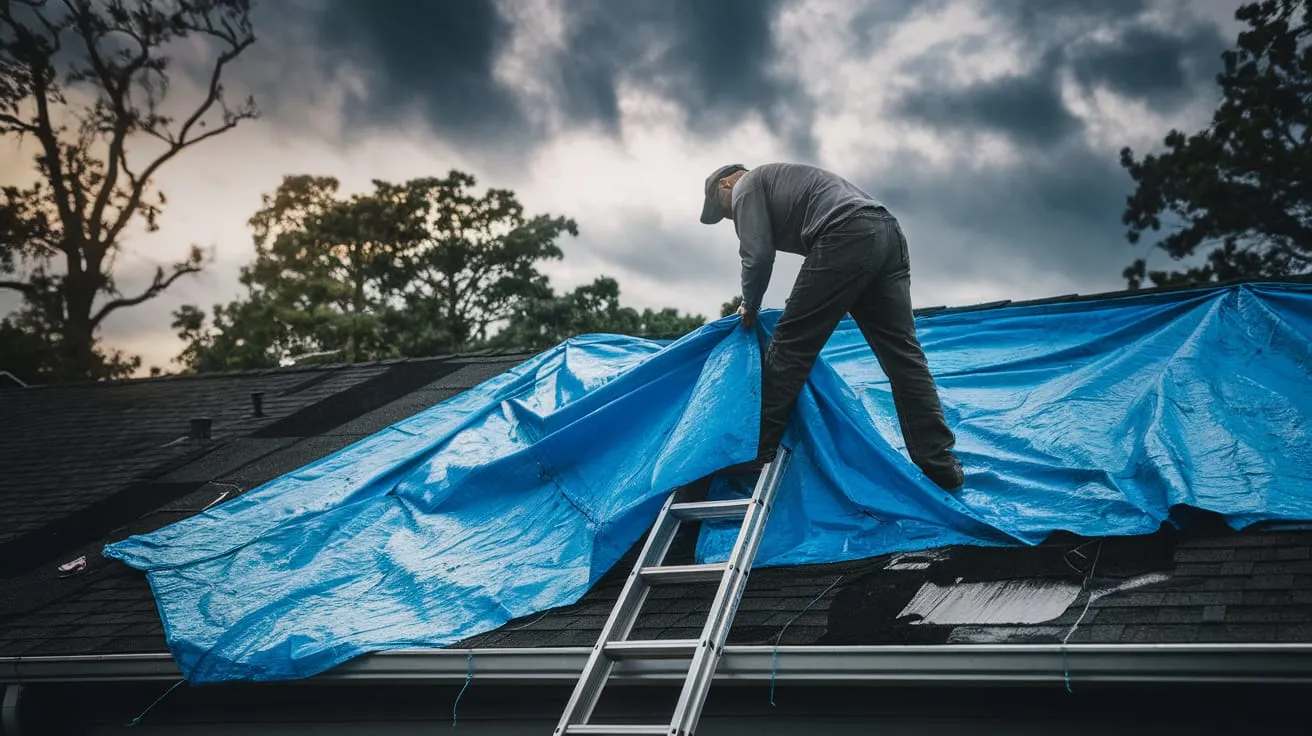
For active leaks, we can tarp the area to limit damage until a full repair is scheduled. We do not offer after-hours emergency service; if water is pouring in, call us first thing and we will prioritize your call.
- Active leak into the living space
- Missing or displaced shingles over a large area
- Visible structural sagging or cracking
- Debris blocking drainage that is causing water to pool
Storm damage shows up at the edges first. Drip edge bends back, flashing lifts at a wall, and roofing underlayment is exposed where shingles or panels have been torn away. Wind uplift and hail bruising both open paths that only show up inside after the next rain.
What you can see from the ground after a storm
After wind, look for missing or lifted shingles, granules in gutters, and dents in metal flashing or vents. These are signs of wind damage that may not yet be leaking.
From the ground you can also spot sagging gutters, displaced downspouts, and debris on the roof. Any of these can redirect water into the walls or foundation.
- Missing or creased shingles
- Granules collecting at downspouts
- Dented or loose flashing
- Gutters pulling away from the fascia
- Debris piles on the roof or in valleys
How an insurance claim for storm damage runs, in order
First, document the damage with photos and notes, and call your insurer to open a claim. They will assign a claim number and may send an adjuster.
We can meet the adjuster on site to walk the roof and point out storm-related damage. After the adjuster's report, you receive a scope and a settlement; we can review it with you before work begins.
Keep receipts for any temporary repairs, as some policies reimburse those costs. The entire process is between you and your insurer; we provide documentation and a detailed estimate for the work.
- Document damage and call your insurer
- Schedule the adjuster visit
- Have a contractor meet the adjuster
- Review the scope and settlement
- Schedule repairs and keep receipts
What a storm damage repair actually fixes
A repair addresses the specific failure: replacing missing shingles, re-securing flashing, or patching a punctured membrane. It restores the roof's ability to shed water at that location.
Repairs are the right spend when the damage is localized and the rest of the roofing system is sound. If the roof is near the end of its service life or damage is widespread, replacement may cost less than repeated repairs.
- Replace missing or damaged shingles
- Reattach or replace flashing at walls and penetrations
- Seal or patch membrane punctures
- Clear drainage paths and resecure gutters
Where storm debris blocks the roof edge
Most interior leaks start at the roof edge, where gutters and flashing meet. Storm debris can clog gutters, causing water to back up under shingles or behind fascia.
After a storm, check that gutters are clear and securely attached. We can inspect and repair gutter systems as part of storm damage repair.
- Clear debris from gutters and downspouts
- Reattach gutters pulled loose by wind
- Replace damaged sections
- Ensure downspouts discharge away from the foundation
Steep-slope storm repairs and material matching
On steep-slope homes, storm damage often means missing shingles, lifted flashing, or leaks at penetrations. Our crew is trained to work safely on steep roofs and to match existing materials.
We install shingles from GAF Timberline HDZ, which carries a UL 2218 Class 3 impact resistance rating on packages bearing the impact resistance statement. For tile roofs, we work with Westlake Royal clay and concrete tile, which offers a 50-year limited, fully transferable warranty.
- Shingle repair and replacement
- Tile repair and replacement
- Flashing repair at walls, chimneys, and skylights
- Gutter and downspout repair
Commercial flat and low-slope assemblies after a storm
Commercial roofs often suffer wind damage that lifts membrane at edges or punctures it with debris. We repair TPO, modified bitumen, and metal roofing systems.
For TPO, we install Carlisle SynTec Sure-Weld TPO, fully adhered, which carries a 5, 10, 15 or 20-year system warranty; the term depends on the components in the assembly, not the membrane alone. We also install Fabral Stand 'N Seam metal panels with a 30-year paint-finish warranty against cracking, chipping, peeling, fading and chalking.
- TPO membrane repair and replacement
- Metal panel repair
- Flashing and edge metal repair
- Drain clearing and repair
Annual visits that protect warranty coverage
Annual roof maintenance helps prevent storm damage and keeps warranties valid. It includes clearing drains, checking flashing and fasteners, and looking for loose or missing shingles.
After a storm, a maintenance visit can catch small issues before they become leaks. We offer roof maintenance plans for both residential and commercial roofs.
- Clear gutters and drains
- Inspect flashing and sealant
- Check for loose or missing shingles
- Document conditions for warranty compliance
Damage extent and materials set the price
The cost of storm damage repair depends on the extent of damage, the materials involved, and access to the roof. Our published price range is $450 to $45,000, which covers minor repairs to full replacements.
We provide a written estimate before work begins. For insurance claims, we can provide a detailed scope to support your claim.
- Size and complexity of the damaged area
- Type of roofing material
- Access and height
- Need for temporary repairs
- Whether replacement is more cost-effective
Details to check in completed repair photos
When you review completed work, look at the details: straight lines on shingles, sealed flashing, and clean gutter lines. These show whether the repair was done with care.
Ask to see photos of similar storm damage repairs, especially if your roof is tile or metal. A gallery should show before and after views from multiple angles.
- Neat shingle alignment
- Properly sealed flashing
- Secure gutters and downspouts
- Clean job site