Metal Roofing
40-70 Year Performance, Zero Combustion Risk
Standing seam and corrugated metal roofing installation in the East Bay. Fire-resistant, energy-efficient, and built to last 40-70 years. Steel, aluminum, and copper options.
Call (925) 722-4916 NowThe Roof That Belongs in the Oakland Hills
Metal roofing went from a niche product to a mainstream East Bay choice in about ten years, and the two things that drove it were wildfire and solar. After the Tubbs, Camp, and Glass fires, every hillside homeowner in Oakland, Berkeley, Orinda, and Lafayette started asking the same question: what's the roof that doesn't burn? And once people started planning solar arrays, the answer stopped being "tile" and started being "standing seam," because standing seam is the only roof you can mount panels to without drilling a single hole through the waterproofing.
I'll say something contractors of my generation don't always say out loud: I was skeptical of residential metal through most of the 1990s. I'd seen too many agricultural barns rattle in wind, too many exposed-fastener jobs leak at year 12 when the neoprene washers cooked out. The product has changed. The installation methods have changed. What we install today on an Oakland hills home is a different animal from what I grew up around.
Non-Combustible
Class A fire rating. Metal won't ignite from wildfire embers, radiant heat, or direct flame, the #1 concern for East Bay hillside homes.
Solar-Ready
Standing seam accepts clamp-on solar mounts with zero roof penetrations. The only roofing material that makes solar installation better.
Cool Roof Rated
Reflective coatings meet Title 24 energy code. Surface temperatures 50-60°F lower than dark shingles on summer afternoons.
100% Recyclable
At end of life (decades from now), every piece goes back into the recycling stream. Thirty-five percent of all steel is already recycled content.
What Is Metal Roofing
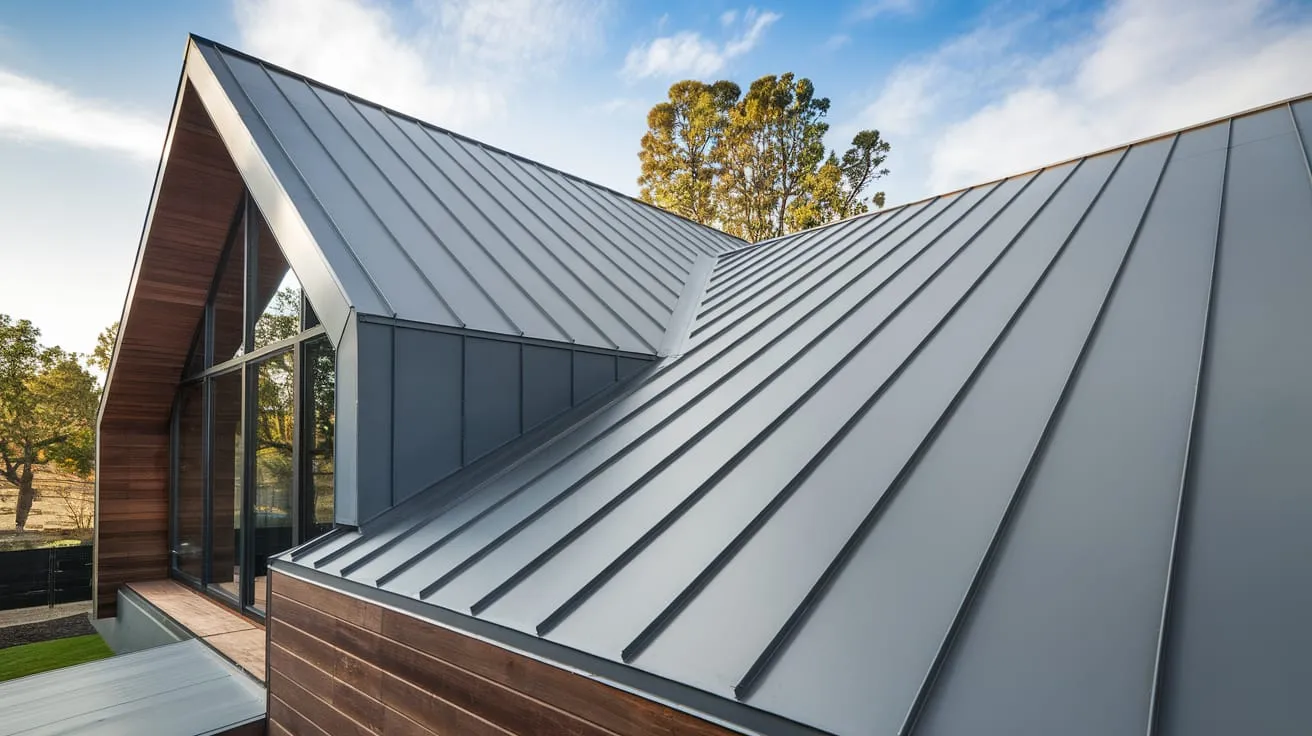
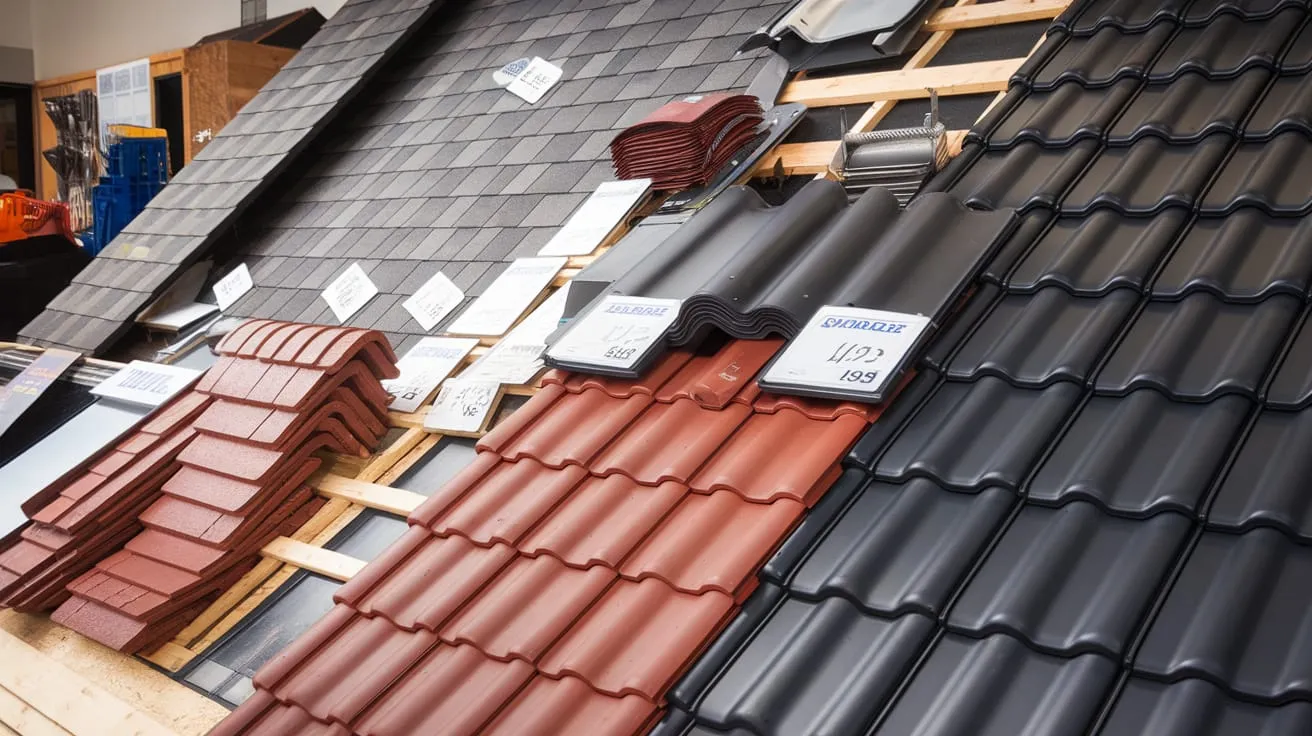
"Metal roofing" covers three genuinely different products. Standing seam is long continuous panels, usually 12 to 18 inches wide, with raised seams mechanically crimped together to hide every fastener. That's the premium residential option and what we install on most of our Oakland and Berkeley hills jobs. Metal shingles are individual pieces sized and shaped like composition shingles or shake, installed in courses — they look more traditional and fit HOA restrictions in some neighborhoods where standing seam reads as too modern. Stone-coated steel is a steel panel with a factory-applied chip coating that makes it look like tile or shake from the ground — Decra, Metro, and Westlake Royal Metro make the products we install here.
The substrate is usually 24 or 26-gauge galvalume steel, sometimes aluminum for coastal proximity or weight concerns, and the coating is Kynar 500 or Hylar 5000 PVDF finish on the premium panels. That Kynar coating is where the 40-year fade warranty comes from, and it holds up.
When Metal Makes Sense (and When It Doesn't)
Metal is the right call when fire is the controlling concern, when solar is in the plan, when the architecture is modern enough to carry a standing-seam profile, or when you're planning to own the home for 30-plus years and you want the lowest cost-per-year across that span. The Oakland hills, Berkeley hills, Orinda, Montclair, and the upper reaches of Lafayette and Moraga are metal-friendly markets almost by default now.
Here's my honest stance: metal isn't loud if it's installed with proper underlayment and solid decking — that myth is 30 years old and it came from agricultural barns where panels sat on purlins with nothing underneath. Put high-temp synthetic underlayment over structural sheathing and insulate the attic, and a standing seam roof is quieter in rain than an asphalt roof because the panels absorb vibration instead of slapping.
Where metal is the wrong call: a traditional Craftsman in the flats where the neighborhood is 100% composition shingle and an HOA won't allow standing seam — you'll fight a losing battle over aesthetics. A budget-controlled tract re-roof in Antioch or Brentwood — the math doesn't pencil out against architectural shingle unless you're staying 30-plus years. Any house with unresolved ventilation problems, because thermal movement in a metal roof will magnify ventilation shortfalls and create condensation under the panels.
Brands and Product Lines We Install
Decra Stone-Coated Steel — we install the Shake, Tile, Shingle XD, and Villa Tile profiles. Decra is the category leader for stone-coated steel. Fifty-year limited warranty, Class A fire rating as part of the assembly, and the chip coating handles UV and impact better than painted finishes.
Metro Roofs — the other major stone-coated steel brand, similar performance to Decra with slightly different profile options. We'll install Metro when the specific profile or color matches the project better.
Westlake Royal Metro — newer entry in the stone-coated space, competitive pricing, good color palette.
McElroy Metal — our standing seam go-to for steel panels. We typically spec the Maxima or Medallion-Lok system. McElroy runs a Bay Area fabrication capacity that cuts lead times.
ATAS International — premium standing seam, especially for aluminum panels where we're dealing with a coastal microclimate or an all-aluminum spec.
Englert — another standing seam manufacturer we work with, good field support and custom color matching.
The Installation Process
Standing seam is different enough from shingle installation that most roofers can't do it. Stone-coated steel is closer to a shingle install but still has its own details.
For standing seam, tear-off comes first, down to the deck. We inspect and replace sheathing, then roll high-temperature synthetic underlayment — not standard felt, because felt can stick to hot panels in summer and create thermal bridging. Peel-and-stick self-adhered membrane at eaves (CRC R905.1.2 ice shield requirement applies in some of the higher elevation East Bay parcels), valleys, and penetrations.
Panel layout starts at one rake and works across. Panels either snap-lock or get mechanically crimped with a seaming tool — mechanical seaming is stronger, and that's what we run on anything above a 6:12 pitch or exposed to significant wind uplift. Clip spacing is per manufacturer spec, usually 12 to 24 inches, with a fixed point at the ridge and floating clips toward the eave to let the panel expand and contract with temperature. Metal moves about an eighth of an inch per ten feet per 100°F — not a lot, but enough to buckle a panel if you pin it down on both ends.
Flashings are fabricated from matching metal, not generic aluminum. Dissimilar metals are isolated with separators to prevent galvanic corrosion — stainless fasteners never touch aluminum panels without a barrier. Ridge cap is vented where ventilation requires it, blind-closed where it doesn't. Grounding is a California-specific requirement on metal roofs with nearby electrical service, and we coordinate with the electrician on every project.
Stone-coated steel installs over battens with a modified shingle-style overlap. Faster install than standing seam, rougher tolerance on the substrate, and the chip coating hides minor imperfections that would telegraph through a painted standing seam panel.
Code Requirements in the East Bay
CRC R905.10 is the governing section for metal roof coverings. It covers slope minimums (most standing seam systems are rated down to 3:12 or 2:12 with seam sealant), fastener type, underlayment, and finish requirements.
Chapter 7A applies across all the VHFHSZ zones, and this is where metal is easiest of all the materials we install. A steel or aluminum panel is inherently non-combustible — it's already Class A without any granule coating or ember test. The assembly still needs compliant underlayment, ember-resistant vents, and proper edge closures, but the material side of the equation is handled.
R905.1.2 requires an ice shield at the eaves in specific climate and elevation scenarios. Most East Bay parcels don't trigger this, but some of the higher Oakland and Berkeley hill addresses do, and we'll spec it as a belt-and-suspenders measure regardless.
Title 24 cool roof credit is almost automatic with a reflective Kynar finish — we're routinely hitting 0.25 solar reflectance and 0.75 thermal emittance on cool-rated panels, which is where the Title 24 compliance path opens up.
Pricing and Timeline
Standing seam runs $1,400 to $2,400 per square installed, depending on gauge, panel width, and finish tier. Stone-coated steel runs $1,100 to $1,700 per square. For a typical East Bay hillside home, that's $40,000 to $110,000 all-in for a full re-roof.
Lifespan is 40 to 70 years depending on gauge, coating, and how well the original installation handled thermal movement. A 24-gauge galvalume standing seam with Kynar finish, properly installed, is a 50-to-60-year roof without major intervention. Aluminum runs longer in coastal conditions.
Timeline: three days to two weeks depending on panel complexity and roof geometry. A simple 25-square gable in Montclair with long continuous panels might take four days total. A complex hip-and-valley roof with multiple penetrations and custom ridge work can stretch past two weeks.
East Bay Cities Where Metal Works Best
Oakland hills, Berkeley hills, Montclair, Piedmont — wildfire exposure, modern architecture, solar planning, high-value homes where the lifespan math pencils out.
Orinda, Lafayette, Moraga — VHFHSZ territory, mid-century modern stock, Chapter 7A compliance built in.
Walnut Creek hills — same reasoning, different microclimate.
Alamo and Danville — standing seam works on contemporary custom homes; stone-coated steel works everywhere tile would otherwise be the spec and the framing can't carry the tile load.
Modern and contemporary homes anywhere in the East Bay — if the architecture supports it, metal looks right and performs right.
Frequently Asked Questions
Is a metal roof actually loud in the rain?
No — that's a myth left over from agricultural buildings with panels installed over purlins and no insulation. A residential standing seam roof sits on solid sheathing with high-temp synthetic underlayment and an insulated attic below. Measured interior sound during rain is actually quieter than an asphalt shingle roof, because the underlayment absorbs vibration.
How much does metal roofing cost in the East Bay?
Standing seam runs $1,400 to $2,400 per square installed. Stone-coated steel runs $1,100 to $1,700. For a typical Oakland hills, Orinda, or Lafayette single-family home, that's $40,000 to $110,000 all-in including tear-off, underlayment, panels, flashings, permits, and cleanup. Aluminum and copper push toward the high end of that range.
Does metal roofing work well with solar panels?
Standing seam is the best roof for solar. Clamp-on mounts (S-5! or similar) attach directly to the seams with no penetrations through the waterproofing. That preserves the roof warranty and simplifies panel removal for future service. Metal outlasts solar panels by decades, so you won't need to re-roof under an existing array. Stone-coated steel needs penetration-style mounts, which still work but lose that advantage.
Will metal dent in a hail storm or from a fallen branch?
Heavy impact can dent a metal panel. In the East Bay, hail big enough to dent 24-gauge steel is rare, but oak branches drop regularly in the hills. Stone-coated steel hides dents better because the chip coating visually masks minor deformation. Standing seam shows dents more but repairs are a panel replacement, not a reroof. We've replaced more tree-damaged shingle roofs than metal roofs by a wide margin.
How long does a metal roof last in the East Bay?
Forty to seventy years depending on gauge, coating, and installation quality. A 24-gauge galvalume standing seam with Kynar 500 finish, installed with proper thermal movement allowance, is a 50-to-60-year roof. Aluminum runs longer in marine-influenced microclimates. Copper lasts 100 years and then some, but it's reserved for historic and high-end projects.
Can metal roofing be installed over my existing shingles?
We don't do it. Even though code technically allows it in some cases, overlays hide rotten decking and underlayment failures that will eventually telegraph through the new roof. Tear off, replace any soft sheathing, and install the metal over a clean deck with new underlayment. That's how you get the 50-year lifespan the material is capable of.
Ready to Talk Specifics
If metal is on your shortlist — whether it's wildfire concerns, solar plans, or just wanting a roof you don't have to think about for the next four decades — we'd rather come look at the house than quote blind. We'll measure, check the deck, confirm your Chapter 7A status, and write you a real line-item estimate.
Call East Bay Roofers at (925) 722-4916, or request an estimate online. Founded 1988 in Concord, C-39 licensed (CA #987654), GAF Master Elite and CertainTeed SELECT ShingleMaster certified, 4.9 out of 5 across 527 reviews. We've been installing standing seam and stone-coated steel across Oakland, Berkeley, Orinda, Lafayette, and Montclair since long before metal was the trendy answer.
Metal Roofing Costs
Corrugated Steel
Exposed-fastener corrugated panels. Agricultural aesthetic or modern industrial look. 40-year paint warranty. Fastest installation.
Standing Seam Steel
Concealed-fastener panels with raised seams. Clean modern lines. Kynar 500 paint finish. 40-50 year expected life.
Premium Metals
Aluminum standing seam (no rust, lighter weight) or copper panels (natural patina, 100+ year life). Architectural-grade installations.
Frequently Asked Questions
Is a metal roof noisy when it rains?
No. This is the most common misconception about metal roofing. With proper underlayment, solid decking (not purlins), and attic insulation, a metal roof is no louder than a shingle roof in rain. The old 'tin roof' reputation comes from agricultural buildings with no decking or insulation underneath, that's not how we install residential metal.
Will a metal roof attract lightning?
No. Metal is conductive but doesn't attract lightning. Lightning strikes the highest point regardless of material. In fact, metal roofing is safer in a lightning event because it's non-combustible, it disperses the energy without igniting, unlike wood shake or even asphalt shingles.
Does metal roofing work with solar panels?
It's the best roof for solar. Standing seam panels accept solar clamps that mount directly to the seams, no roof penetrations needed. This preserves your roof warranty and simplifies future panel removal for maintenance. Metal roofs also last longer than solar panels, so you'll never need to remove panels for a roof replacement.
Can you install metal over existing shingles?
Technically possible with corrugated panels over purlins, but we recommend against it for the same reason we oppose shingle overlays, it hides potential decking damage. A proper metal installation starts with a clean deck, new underlayment, and proper ventilation. Do it once, do it right.
How does metal compare to shingles long-term?
Metal costs 2-3x more upfront but lasts 2-3x longer, requires less maintenance, reduces cooling costs 10-25%, is 100% recyclable, and never needs moss treatment. Over 50 years, metal is typically cheaper than two shingle roofs. It's the lowest lifetime-cost material we install.
Get Your Free Roof Inspection
Call today for a no-obligation estimate from a licensed East Bay roofing contractor.
Call (925) 722-4916Metal's Honest Downsides
Metal dents. A heavy tree branch or large hail will leave a mark that's harder to repair than replacing a few shingles. Metal also expands and contracts with temperature, cheap installations with insufficient fastener spacing develop oil-canning (wavy appearance). And if you need to match an addition 15 years later, color-matching faded Kynar paint isn't easy. These are manageable issues, not dealbreakers, but you should know them upfront.
Related Services
Shingle Roofing
Budget-friendly alternative when metal's upfront cost isn't feasible.
Roof Replacement
Complete tear-off and replacement with a metal roofing system.
Commercial Roofing
Metal systems for commercial, retail, and industrial buildings.
We Serve 36+ East Bay Cities
From Concord to Fremont, Oakland to San Ramon — East Bay Roofers covers the entire East Bay.
View All Service Areas