Richmond HOA & Historic Review: Roofing Rules Explained
By East Bay Roofers Team | 2026-02-08
Call (925) 722-4916 — Free EstimateRichmond is not the kind of place people associate with HOAs. The Iron Triangle, North and East, Belding Woods, and most of the flatland neighborhoods are standard single-family lots with no architectural review at all — you call the city, pull a permit, and re-roof. That's most of Richmond.
But there are pockets where it gets more complicated, and those pockets surprise homeowners. Marina Bay's condo associations have strict flat-roof replacement rules written into the CC&Rs. A handful of master-planned developments on the Hilltop and east side have active architectural review boards. And Point Richmond — which has no HOA at all — has something arguably tougher: a city historic design review process that treats roofing like any other exterior alteration on a contributing structure.
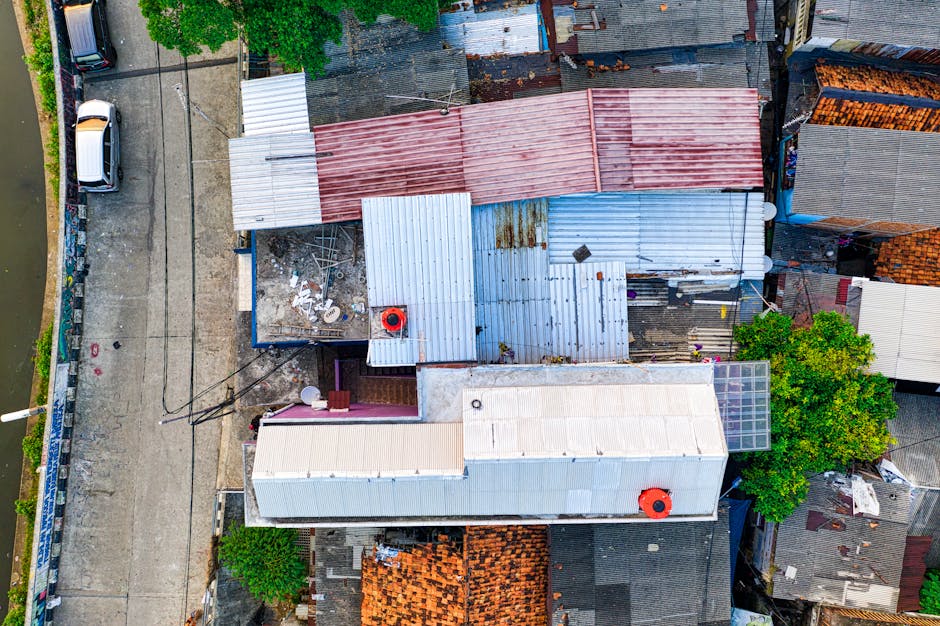
Photo: Pexels
I've been re-roofing in Richmond since the late 1990s. The approval landscape is less uniform than Contra Costa inland, and the salt air adds a technical layer that most HOA guidelines don't address at all. This guide covers where each of those issues lives and how we handle them.
The Honest Take on Richmond HOAs
Richmond's HOAs are usually less restrictive than Contra Costa inl. I can walk into a Hilltop review meeting with a CertainTeed Landmark in weathered wood and get approval in one round — the same submission in Roundhill Country Club in Alamo would probably come back for color revisions. Board members here tend to be more practical: they care that the roof looks neat and matches the neighbors, not that it matches a 40-year-old color palette locked in by deed.
The exception is Point Richmond. The historic district is its own beast. Point Richmond isn't governed by an HOA — there's no private board collecting dues — but any exterior work on a designated historic or contributing structure runs through Richmond's Design Review Board under the city's historic preservation ordinance. That's a governmental review, not a private one, and it has legal teeth the HOAs don't.
I once spent three months on a re-roof on Washington Avenue in Point Richmond because the original submission proposed dimensional asphalt shingles on a 1910 Craftsman where the DRB wanted a flat-profile composition or slate to preserve the historic character. We ended up on a low-profile CertainTeed Carriage House line and the homeowner was happier with the outcome than the original plan. But it added two months and several thousand dollars to the project.
Marina Bay: Condo and Townhouse Associations
Marina Bay is the densest concentration of HOAs in Richmond. Most of the condo and townhouse developments along Marina Way and the waterfront were built in the 1980s and 1990s with master associations controlling the exterior envelope, including roofs. Here's where it gets specific to Marina Bay:
- Flat and low-slope roofs dominate. Most Marina Bay buildings are flat-roofed with TPO, PVC, or built-up roofing. Individual owners usually don't even control the roof — the association does, and replacement happens on an association schedule as a common-area project.
- Homeowner discretion is narrow. If you own a single-family detached home in one of the Marina Bay pockets that allows individual roofing choices, you're still submitting to the architectural committee and choosing from a narrow material and color palette.
- Salt air is not usually addressed in the CC&Rs. This is the quiet problem. HOA guidelines written in the 1980s spec standard galvanized fasteners, standard drip edge, and standard flashing — none of which hold up in a building 500 feet from the bay. We routinely upgrade to stainless steel fasteners and copper flashing on Marina Bay jobs even when the guidelines don't require it, because galvanized fails in 5 to 7 years on salt-exposed elevations.
If you own a Marina Bay condo and you're seeing leaks, the first call isn't usually to us — it's to your association, since the roof is almost certainly common property. We do get called as an approved vendor by several of the larger associations for their scheduled replacements.
Hilltop and Master-Planned Developments
Hilltop, Country Club Vista, and several newer developments on Richmond's east side (along Hilltop Drive, Fitzgerald Drive, and out toward the El Sobrante border) have active HOAs with architectural review boards. These are closer to what people expect from a suburban HOA: monthly or quarterly review cycles, written guidelines, and a defined palette of approved materials and colors.
What these boards typically require:
- Class A fire rating. Parts of the Hilltop area are close enough to open hills that fire-rated assemblies are expected even where not strictly code-mandated.
- Architectural shingle minimum. Three-tab shingles are generally rejected. The boards want dimensional shingles (GAF Timberline HDZ, CertainTeed Landmark, Owens Corning Duration) or tile on homes originally built with tile.
- Earth-tone color palette. Weathered wood, driftwood, and various brown-gray combinations clear easily. Lighter grays and darker slates get case-by-case review.
- Matching neighbors. Most Richmond boards explicitly look at what the three or four closest neighbors have installed recently, and they want the new roof to read coherently with that context.
Approvals in Hilltop typically take 2 to 3 weeks when the submission is complete. Compared to Roundhill in Alamo, this is quick.
Point Richmond Historic Design Review
Point Richmond is different from every other Richmond neighborhood. It's the oldest part of the city, predating the shipyards, and it contains one of the largest intact collections of pre-1920 residential architecture in the East Bay. The whole Point is a city-designated historic district, and individual contributing structures — Craftsman bungalows, Queen Anne Victorians, early 20th-century cottages — trigger historic design review on exterior work.
The review is run by the Richmond Design Review Board under the city's historic preservation ordinance. For roofing, here's what matters:
- Material compatibility with the era. Original roofs on most Point Richmond contributing structures were wood shake, composition, or slate. Wood shake is off the table now (fire code), so the acceptable replacements are low-profile composition shingle, stone-coated steel with a shake or slate profile, or actual slate on higher-budget projects.
- Visible ridge, eave, and rake details. The DRB cares about what you see from the sidewalk. Exposed rafter tails, ridge height, fascia profile, and eave depth all get reviewed. Modern thick architectural shingles with a heavy shadow line can get rejected on a Craftsman because they change the visual weight of the roof edge.
- Color compatibility. Darker earth tones and greens clear easily. Bright colors and high-contrast patterns do not.
- Flashing materials. The DRB will often specify copper or lead-coated copper flashing on contributing structures for both historic appropriateness and durability in the salt air.
Submission to the DRB takes 4 to 8 weeks depending on whether a full board hearing is required or whether staff can handle it administratively. Simple repairs sometimes clear in two weeks via staff-level review; anything involving a material change or visual alteration goes to the full board.
The Point Richmond Neighborhood Council is active and informed, and while they don't have legal authority over your roof, their informal input carries weight with the DRB. I've had jobs where the Neighborhood Council recommended a slightly different shingle profile and the DRB adopted that recommendation verbatim.
What Salt Air Means for Richmond Roofs, Regardless of HOA
This is the section nobody's HOA guidelines cover and it's the single biggest technical factor on any Richmond roof within a mile of the bay. Salt aerosol corrodes metal. Galvanized fasteners rust. Standard drip edge pits and streaks. Plain steel flashing fails at the fold lines in 5 to 7 years — faster on west-facing elevations that take direct onshore wind.
What we install on salt-exposed Richmond roofs:
- Stainless steel fasteners. 304-grade minimum. Yes, they cost three to four times more than galvanized. They last the life of the roof.
- Copper flashing at valleys, chimneys, and penetrations. Or aluminum with a marine-grade coating if the HOA color palette rules out copper's natural patina.
- Aluminum or stainless drip edge. Not galvanized, regardless of what the HOA guideline says.
- Marine-grade caulks and sealants. The general-purpose stuff dries out and cracks faster on salt-exposed roofs.
On Marina Bay, Point Richmond, and bay-facing sections of Brickyard Cove, these upgrades aren't optional if you want the roof to last its rated life. I've torn off 12-year-old roofs where the shingles were still in decent shape and the galvanized fasteners had rusted through. The roof didn't fail — the hardware did — but the result is the same.
The Approval Timeline by Neighborhood
- Marina Bay single-family: 2 to 4 weeks through the association architectural committee
- Marina Bay condo/townhouse: Usually handled by the association on a building-wide schedule; individual owner timeline doesn't apply
- Hilltop / Country Club Vista: 2 to 3 weeks through the HOA
- Point Richmond (non-contributing structure): No design review required; city permit only
- Point Richmond (contributing historic structure): 4 to 8 weeks through the Richmond Design Review Board
- Most flatland neighborhoods (North and East, Iron Triangle, Belding Woods): No HOA or design review; city permit only
Frequently Asked Questions
Does Richmond have HOAs that control roofing?
Some neighborhoods do. Marina Bay has condo and townhouse associations with strict flat-roof replacement rules. Hilltop and several master-planned developments on Richmond's east side have active architectural review boards. Most flatland neighborhoods — Iron Triangle, North and East, Belding Woods — do not have HOAs at all. Point Richmond has no HOA but does have city historic design review for contributing structures.
What is Point Richmond historic design review and do I need it?
Point Richmond is a city-designated historic district. Exterior work on contributing structures — typically pre-1920 Craftsman, Victorian, and early 20th-century homes — requires review by the Richmond Design Review Board under the city's historic preservation ordinance. Roofing is covered, including material, color, ridge profile, and flashing choices. Non-contributing structures within the district are usually exempt. Check your property's status with the Richmond Planning Division before re-roofing.
Can I install wood shake on a Point Richmond Craftsman?
No. Wood shake is off the table in Richmond regardless of historic character because of fire code and insurance constraints. For contributing Craftsman structures, the DRB typically approves low-profile composition shingle (CertainTeed Carriage House or similar), stone-coated steel with a shake profile (Decra Shake XD), or actual slate on higher-budget restorations. The goal is material that preserves the visual weight and texture of the original roof without violating current code.
Why do Richmond roofs need stainless fasteners?
Salt air. Any Richmond home within about a mile of the bay is in a coastal corrosion zone, and standard galvanized fasteners typically fail in 5 to 7 years — pitting, rusting, and losing holding power while the shingles themselves are still intact. Stainless steel (304-grade minimum) costs more upfront but lasts the full life of the roof. Copper or marine-grade aluminum flashing serves the same purpose. HOA guidelines often don't address this; we upgrade regardless.
Who is responsible for the roof on a Marina Bay condo?
Usually the association, not the individual owner. Most Marina Bay condo and townhouse roofs are treated as common area under the CC&Rs, which means replacement is scheduled and funded through association reserves. Individual owners typically cannot re-roof unilaterally. If you're seeing leaks or damage, the first call is to the association or management company, not a roofing contractor. Exceptions exist for detached or semi-detached pockets within Marina Bay — check your CC&Rs.
How long does Hilltop HOA roofing approval take?
Typically 2 to 3 weeks when the submission is complete. Hilltop and Country Club Vista HOAs run relatively streamlined architectural review compared to stricter inland Contra Costa boards. Architectural shingles from GAF, CertainTeed, and Owens Corning in earth-tone colors usually clear in one review cycle. Submissions with incomplete documentation or materials outside the approved palette can extend to 4 to 6 weeks.
Bottom Line for Richmond Homeowners
Most Richmond homes don't need to worry about HOA or design review at all. If you're in the Iron Triangle, North and East, Belding Woods, or most of the flatland, you pull a city permit and re-roof. Straightforward. But if you're in Marina Bay, Hilltop, one of the master-planned east side developments, or Point Richmond, the approval layer matters and can add 2 to 8 weeks to the project. And regardless of neighborhood, if your home is within a mile of the bay, the salt-air hardware upgrades are non-negotiable if you want the roof to outlast the fasteners.
If you want someone who's been reading Richmond CC&Rs and Design Review Board packets for decades, that's what we do. East Bay Roofers has been serving Richmond and the broader East Bay since 1988. We're C-39 licensed and carry. Call (925) 722-4916 or request a free estimate online. We'll walk your specific situation — HOA, historic district, salt exposure, whichever combination applies — and give you an honest plan from submission to final inspection.
Related Reading
Have a roofing question? Talk to an East Bay expert — no obligation, just honest advice.
Get Your Free Roof Inspection
Call today for a no-obligation estimate from a licensed East Bay roofing contractor.
Call (925) 722-4916