Pleasant Hill Emergency Roof Repair: Ranch & Flat Roofs
By East Bay Roofers Team | 2026-02-19
Call (925) 722-4916 — Free EstimateThe Pleasant Hill emergency call that still sticks with me came out of Gregory Gardens during the New Year's Eve atmospheric river a few seasons back. A homeowner called at 6 AM, their master bedroom ceiling had a brown stain the size of a dinner plate when they went to bed, and by morning it was the size of a coffee table and dripping onto the nightst. The roof was a 3:12 pitch mid-century ranch with composition shingles over original 1958 decking. The "leak" was 18 feet of ponded water behind a clogged cricket flashing above a chimney. It had been slowly soaking the deck for the entire storm.
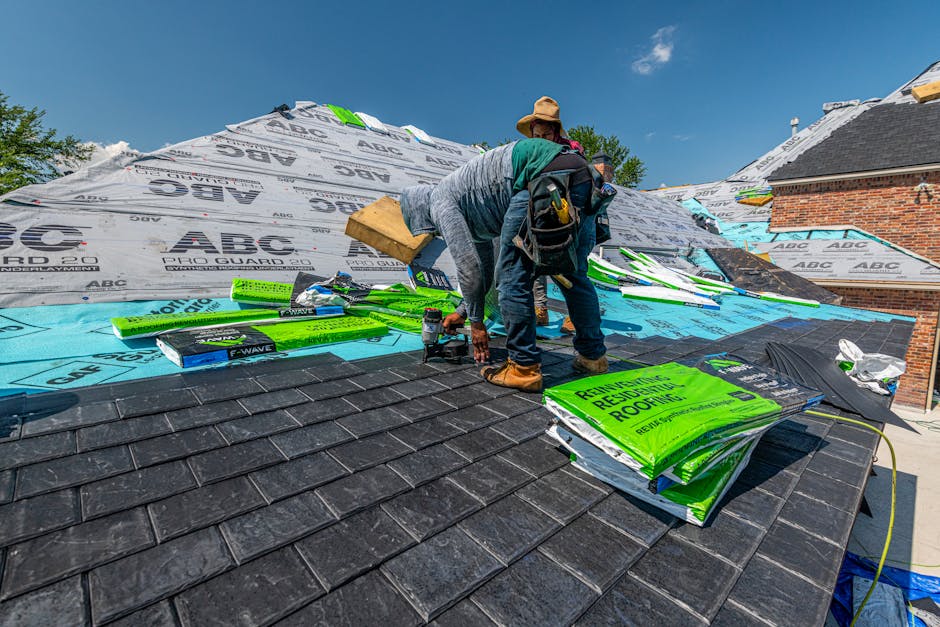
Photo: Pexels
That's the Pleasant Hill emergency pattern in a nutshell. Shallow-pitch ranches, old cricket details, decades of deferred maintenance on transitions between the main roof and additions, and then an atmospheric river dumps three inches of rain in six hours and everything that was marginal suddenly isn't. Here's what we tell homeowners in Poets Corner, Sherwood Forest, Ellinwood, and Vista Oaks when they call us at sunrise.
What Counts as an Emergency (and What Can Wait Until Morning)
We get this question every time. Here's the honest version: most leaks that scare you at 11 PM aren't things we can safely fix at 11 PM. A drip into a bucket is not an emergency in the structural sense. It's uncomfortable, yes. It's not urgent.
Real emergencies — the ones that get our truck rolling in the dark:
- Water running visibly down drywall, not just dripping
- A bulging ceiling with water trapped behind it
- Active water at any electrical fixture, that's a fire and shock risk
- Tree or branch impact with daylight visible from inside
- Wind-lifted roofing during an active storm with an occupied room below
- Commercial flat-roof tear where the membrane is flapping in the wind
Everything else gets containment advice on the phone and a first-light arrival. We'd rather drive Contra Costa Boulevard in daylight than stumble around a wet ranch roof at 2 AM.
First 24 Hours, What You Do Before We Get There
Minute 0, kill the breaker. If water is near any light fixture, ceiling fan, or outlet, flip the circuit at the panel before you touch anything else. Water tracks along joists and exits at the path of least resistance, which is usually a box cutout.
Minute 5 — drain the bulge. This is the one thing homeowners resist and the one thing that saves the most drywall. If the ceiling is sagging, take a pencil tip and poke a single controlled hole at the lowest point of the bulge. A catch bucket underneath. A contained drain beats a collapsed ceiling every time, and on the shallow-pitch Pleasant Hill ranches we see ceiling bulges all the time because water spreads out flat instead of running down.
Minute 15 — document. Video through every affected room. The stain, the bucket, the floor, the walls. Go outside if it's safe and shoot the roof from the ground. If there's hail damage on the lawn, photograph it before the sun melts it. Insurance adjusters are looking for sudden-cause evidence, and timestamps help.
Hour 1 — call us. We'll talk you through the rest over the phone and give you a realistic arrival window. If you're downtown in a commercial flat-roof building, we prioritize those calls because built-up roof failures can flood a tenant space in minutes.
Hour 1 onward, stay off the roof. Pleasant Hill ranches are shallow enough that homeowners think they can handle it. They can't. A wet composition shingle is slippery, the edge doesn't have good fall protection, and the drop is enough to break a hip. Don't.
Why Pleasant Hill Roofs Fail the Way They Do
The housing stock here is the story. Most of the residential leaks we chase come from a handful of predictable sources:
- Ponding water on low-slope ranch sections. The 3:12 and 4:12 ranches in Gregory Gardens, Poets Corner, and Sherwood Forest drain slowly, and anything clogging the flow, leaves, pine needles, a displaced cricket flashing, backs up into a pond. During an atmospheric river, a 2-foot pond becomes a 10-foot pond in an afternoon. That was our New Year's Eve call.
- HVAC rooftop unit seal failure. Many Pleasant Hill homes have HVAC sitting on the roof, and the flashing around the curb is the single most under-maintained detail on the whole house. When the sealant goes, the unit itself becomes a funnel.
- Chimney cricket and counterflashing. The 1960s brick chimneys here were flashed once and never again. By 2026 the sealant is powder.
- Diablo wind uplift. November Diablo events don't dump rain, but they peel shingles. Then the first December storm finds the bare spots.
- Commercial BUR failures downtown. Built-up roof systems on the older commercial stock along Contra Costa Boulevard and downtown Pleasant Hill are at end-of-life. Blisters, alligatoring, seam separation, and when one of those fails during a storm it's a tenant-space emergency, not a routine repair.
What We Do on an Emergency Call
A typical Pleasant Hill emergency visit looks like this. We arrive, talk to you for five minutes to understand where you saw water and when. Inside inspection first, attic if accessible, ceiling stains, wall runs. Then the roof, once we can do it safely.
We tarp. On a shallow-pitch ranch, tarping is actually straightforward, good decking contact, manageable pitch, easy to secure with 1x3 strips and a 6-mil poly tarp run up over the ridge. On a flat downtown commercial roof, a tarp is the wrong tool, we use a liquid-applied emergency patch or a peel-and-stick membrane repair depending on the substrate. Commercial emergencies get a different kit than residential.
We document for your insurance claim on a tablet in real time. Photos, measurements, Xactimate-compatible notes. The adjuster gets a packet, not a phone call and a receipt.
Pleasant Hill-Specific Complications
Post-Diablo wind checks are a different call than storm emergencies. If November just blew through and you're not actively leaking, don't treat it as an emergency. Schedule a regular inspection. We'll catch the lifted tabs before December gets here.
HVAC rooftop unit emergencies are half electrical. If your emergency is water running down an interior wall near an HVAC closet, there's a good chance it's the rooftop unit seal, and the fix involves an HVAC tech as well as us. Mention it when you call so we bring the right crew.
Downtown commercial tenants don't own the roof. If you're a business owner leasing space in downtown Pleasant Hill and your roof just failed, you're probably not authorized to hire us directly — the landlord is. We work with several Pleasant Hill commercial property managers on emergency response; we can help coordinate, but ultimately the building owner approves the scope.
Insurance Claim Reality
Here's what we've learned running claims in Contra Costa County for almost four decades:
- Sudden-cause events are covered. Tree impact, wind damage, storm-driven water intrusion. File these.
- Gradual failures are denied. Ponding damage that's been happening for years, worn pipe boots, failed sealant — these get classified as maintenance and denied, and a denied claim still counts against your policy when renewal comes.
- Adjusters arrive with a playbook. Have your own photos, your own timeline, and an Xactimate-format estimate from us before they show up.
- Don't sign an AOB. Assignment of Benefits transfers your claim rights to a contractor. Legitimate roofers don't require one. If someone pressures you to sign, walk away.
Frequently Asked Questions
Why does my Pleasant Hill ranch roof pond water?
Shallow pitch. A lot of Gregory Gardens, Poets Corner, and Sherwood Forest ranches are 3:12 or 4:12, which drains slowly even when everything is clean. Add a clogged cricket, a shifted HVAC unit, or leaf debris and you get a pond instead of runoff. The fix is maintenance — annual cricket and flashing inspection in October before the atmospheric rivers arrive.
Is a brown ceiling stain an emergency?
Not usually. A dry brown stain means you had a leak, probably weeks or months ago, and the drywall absorbed water before it dried. Call us to schedule a proper inspection. A fresh, expanding, dripping stain is different — that's an active leak and needs containment right now, but it still isn't usually a middle-of-the-night emergency unless water is flowing heavily or near an electrical fixture.
Do you handle downtown Pleasant Hill commercial flat-roof emergencies?
Yes. Built-up roof, modified bitumen, TPO, and EPDM emergencies along Contra Costa Boulevard and the downtown corridor are part of our regular work. Commercial emergencies get prioritized because tenant-space flooding accumulates fast. If you're the tenant rather than the building owner, we can coordinate with the property manager, but they have to authorize the work.
How much does an emergency tarp cost in Pleasant Hill?
A shallow-pitch Pleasant Hill ranch typically runs $450–$850 for a standard emergency tarp. Steeper two-story homes in Vista Oaks or Rudgear-border areas run $700–$1,100. After-hours and weekend response adds $150–$300. Commercial flat-roof emergency patches are priced separately because the materials and labor are different.
How fast can you get to Pleasant Hill in an emergency?
From our Concord shop at 2310 Bates Ave, Pleasant Hill is our fastest response area — 30–60 minutes during business hours for most neighborhoods, and 60–90 minutes for after-hours calls. During major storm events with multiple simultaneous emergencies we prioritize by severity, so call early rather than waiting for it to get worse.
Will my insurance cover a Pleasant Hill roof leak?
Sudden-cause events get paid — wind, tree impact, storm-driven water intrusion. Gradual failures like ponding damage, worn sealant, and deferred maintenance get denied and classified as wear-and-tear. Document thoroughly before cleanup, and weigh whether a borderline claim is worth the premium impact.
When to Call
If you've got active water and a bucket isn't keeping up, call (925) 722-4916. We're 15 minutes away from most of Pleasant Hill. East Bay Roofers has been running emergency calls in Contra Costa County since 1988, We're C-39 licensed and we average.
If the situation is stable, request a quote online and we'll come out during business hours. No pressure, no sales pitch.
Related Reading
Have a roofing question? Talk to an East Bay expert — no obligation, just honest advice.
Get Your Free Roof Inspection
Call today for a no-obligation estimate from a licensed East Bay roofing contractor.
Call (925) 722-4916