Emergency Roof Repair in Alamo: The First 24 Hours After
By East Bay Roofers Team | 2026-03-05
Call (925) 722-4916 — Free EstimateThe call almost always sounds the same. It's raining hard, it's dark, and a homeowner in Alamo Oaks or Livorna Heights is standing in a hallway with a flashlight watching water come through a ceiling fixture. The question is never "what's the best roofing material." The question is "what do I do right now."
Alamo gets two kinds of roof emergencies, and they happen at predictable times of year. October through December brings Diablo wind events, those dry offshore gusts that come screaming down off Mt. Diablo and the ridge above Las Trampas Regional Wilderness, lifting shingles and throwing oak branches onto roofs. Then atmospheric rivers arrive between late December and March, and any weakness from the wind season turns into an active leak overnight.
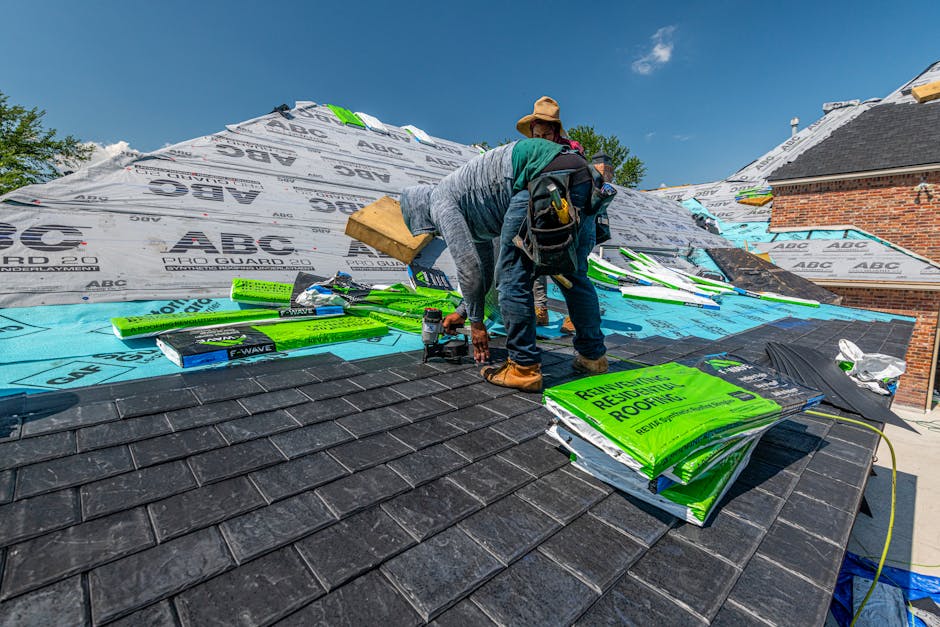
Photo: Pexels
This guide walks through exactly what to do in the first 24 hours when either of those happens to your house. We run these calls throughout 94507. Alamo Plaza Area, Roundhill Country Club, Stone Valley, Alamo Oaks, Las Trampas, Iron Horse Trail Area, Miranda Highlands, and the advice below is what we tell homeowners over the phone before we can get a crew there.
Hour 0: Get People and Electronics Clear of the Water
Before you think about the roof, think about what's directly under the leak. Water tracking along a ceiling joist can travel ten feet from the actual entry point and come out of a light fixture, a smoke detector, or a bath fan housing. That's an electrical hazard, not just a mess.
If water is coming out of any light fixture, ceiling fan, or outlet, kill the breaker for that room at the panel. Don't stand in a puddle while you do it. Move electronics, rugs, and anything fabric out of the path. A $30 plastic drop cloth from the hardware store will save a $3,000 rug, buy two.
Then grab buckets and towels. If you can see the water coming through drywall, take a small screwdriver or the tip of a pencil and poke a controlled hole at the lowest point of the bulge. It sounds counterintuitive, but a pooling ceiling will eventually collapse a full sheet of drywall onto your floor. A single quarter-inch drain hole lets the water come out in one spot you can catch with a bucket.
Hour 1: Document Everything Before You Touch Anything
Your homeowners insurance claim, if you file one, will live or die on the photos you take in the first hour. Shoot video walking through every affected room. Date-stamp timestamps on your phone are enough, don't worry about getting fancy.
Photograph the ceiling, the walls where water tracked down, any wet flooring, the buckets catching drips, and the outside of the house if you can do it safely. If a tree limb is on the roof, get a picture from the ground with the whole house in frame, plus a tight shot of the impact point. If shingles are scattered in the yard after a wind event, photograph them where they landed before you clean up.
Keep the damaged materials. Insurance adjusters love to ask for the "subject shingle" or the piece of flashing that failed. Put it in a garage corner with a sticky note and the date.
Hour 2–4: Tarp the Roof (Or Don't)
Here's the honest version nobody wants to say out loud: most Alamo roofs should not be tarped by the homeowner. The roof pitches in Roundhill, Stonegate, and the custom homes above Stone Valley Road are steep, typically 6:12 to 9:12, and they're often tile, which is slippery, fragile, and deadly when wet. People get killed every year falling off roofs during storms, and we genuinely do not want you on yours.
If your roof is a single-story ranch with a low 4:12 pitch and the weather has cleared, and you're comfortable on a ladder, a tarp is reasonable. Here's how to do it without causing more damage:
- Use a heavy-duty poly tarp, at least 6 mil, sized so it extends two feet past the damage on all sides and runs over the ridge if possible.
- Nail 1x3 furring strips through the tarp into solid decking along the top edge. The ridge-side strip must be under the overlap so water can't run in behind it.
- Weight the downhill edge with more furring strips or sandbags. Do not just throw bricks on it, they slide in the next gust.
- Avoid nailing through tile. You'll crack it and turn a patch job into a full slope replacement.
If any of that sounds like something you shouldn't be doing in the dark during a storm, it is. Call us at (925) 722-4916 for a 24/7 emergency tarp. An emergency tarp in Alamo typically runs $450–$950 depending on roof access, pitch, and how much area we're covering. It's a small price compared to a broken leg or a drywall ceiling collapsing into a living room.
Hour 4–12: Find the Actual Source of the Leak
Water is a liar. Where you see it dripping inside is almost never directly below where it's entering the roof. On an Alamo tile roof, we regularly trace active ceiling leaks back to failure points fifteen or twenty feet uphill, where the underlayment tore at a valley or a flashing nail backed out around a plumbing vent.
The most common sources we find in Alamo emergency calls, roughly in order:
- Failed pipe boot flashing. The rubber collar around plumbing vents dries out from UV exposure and cracks. It's the number one leak source on any roof over 12 years old in this climate.
- Valley underlayment wear. Valleys collect water, leaves, and oak debris, and the concentrated flow wears through underlayment faster than anywhere else on the roof.
- Ridge tile displacement after a Diablo wind event. The tile is still there, but the mortar bond cracked and wind-driven rain finds the gap.
- Skylight perimeter flashing. Skylights have a 15–20 year flashing life regardless of what the glass looks like.
- Wind-lifted shingle tabs. Asphalt shingles losing their sealant strip, we see this on homes that haven't been re-roofed since the early 2000s.
- Oak branch impact. Alamo has beautiful heritage oaks, and every storm drops limbs on somebody's roof.
From the attic, if you can get up there safely, follow the water trail backward with a flashlight. Look for dark staining on the underside of the decking, rusty nail shanks, or wet insulation. The highest wet spot is your entry point, or very close to it.
Hour 12–24: File the Insurance Claim (or Decide Not To)
Not every leak is worth filing a claim for. California homeowners insurance carriers. State Farm, Farmers, Allstate, CSAA, have gotten aggressive about dropping policies after claims, and a $2,000 claim that bumps your premium $400 a year is a bad trade. Here's our rough rule:
- File the claim if there's sudden storm damage, tree impact, wind-lifted shingles across multiple sections, or interior damage over $2,500. These are sudden-cause events that homeowners policies are designed for.
- Pay out of pocket if the leak traces to a worn pipe boot, cracked sealant, or gradual flashing failure. Insurers classify those as maintenance issues and will usually deny the claim anyway while still logging it against your policy.
If you do file, your carrier will send a staff adjuster or an independent adjuster within 24–72 hours. Have your photos, videos, and the contractor's estimate ready. We write estimates that match the Xactimate format insurance adjusters work in, which makes the back-and-forth faster.
Chapter 7A Complications in the Alamo Wildfire Zones
Here's a curveball a lot of Alamo homeowners don't see coming. If your house sits in the CAL FIRE Very High Fire Hazard Severity Zone — that covers most of Roundhill Country Club, Alamo Oaks, properties near Las Trampas Regional Wilderness, and much of the hillside above Stone Valley Road — any roof work over one square triggers California Building Code Chapter 7A.
What that means for an emergency: a quick patch of a blown-off section may force you into Class A assembly compliance, ember-resistant vent mesh, and noncombustible flashings on that area. It's not a reason to skip the repair, but it's a reason to have a C-39 licensed contractor on the job instead of a handyman. Inspectors from the Contra Costa County Department of Conservation and Development in Martinez take Chapter 7A seriously, and unpermitted fire-zone work shows up in escrow later.
What an Emergency Repair Actually Costs in Alamo
Rough 2025 numbers, assuming weekday daylight access and a standard single-family home in 94507:
- Emergency tarp and temporary dry-in: $450–$950
- Single pipe boot replacement: $285–$475
- Valley section repair with new underlayment: $650–$1,400
- Ridge tile rebedding, 10–20 linear feet: $550–$1,100
- Wind damage repair, partial slope shingle replacement: $850–$2,400
- Skylight flashing kit replacement: $475–$950
- Tree impact, structural decking repair: $1,500–$6,000+ depending on framing damage
After-hours and weekend emergency response typically adds $150–$300 to the trip. We'd rather you call us at 2 AM and get a tarp than wait until morning and have another six inches of water in your attic insulation.
Frequently Asked Questions
Should I go on my roof during a storm to find a leak?
No. Wet roofs — especially tile and steep-pitch roofs common in Roundhill, Alamo Oaks, and the hills above Stone Valley Road — are genuinely dangerous. Contain the water inside, document damage from the ground, and call a licensed C-39 roofer for emergency tarp service. Falling off a roof is a far bigger problem than the leak itself.
Will homeowners insurance cover my Alamo roof leak?
Insurance typically covers sudden-cause damage: wind events, tree impact, fallen branches, hail, or storm-driven water intrusion. Carriers generally deny claims tied to gradual wear — cracked pipe boots, worn underlayment, sealant failure — which they classify as maintenance. Document everything with photos before cleaning up, and weigh whether a small claim is worth the premium increase.
How fast can East Bay Roofers respond to an emergency in Alamo?
From our Concord shop at 2310 Bates Ave, we're typically on-site in Alamo within 60–90 minutes for active leaks during business hours, and within 2–3 hours for after-hours emergency calls. Response time stretches during major storm events when multiple homes are affected at once — call as early as possible rather than waiting.
Do I need a permit for an emergency roof repair in Alamo?
Under California Residential Code Section R105.2, minor repairs under 100 square feet (one roofing square) don't require a permit. Anything larger does, and Contra Costa County issues the permit through its ePermits Center online portal. Emergency tarps are not permitted work — they're temporary weatherproofing. The permit comes with the follow-up permanent repair.
How much does an emergency roof tarp cost in Alamo?
A standard emergency tarp installation in Alamo runs $450–$950 depending on roof pitch, access, and the area being covered. Steeper roofs in Roundhill and the Alamo hills cost more because of fall protection and extended setup time. After-hours and weekend calls typically add $150–$300. Tarps buy you 30–90 days to arrange the permanent repair.
Can I use a handyman for emergency roof work in Alamo?
For any job over $500 total or requiring a permit, California law requires a CSLB-licensed contractor. For roofing specifically, that means a C-39 roofing classification. Homes inside the CAL FIRE Very High Fire Hazard Severity Zone — much of Alamo — also need Chapter 7A-compliant materials, which most handymen don't stock. Insurance claims on unlicensed work are typically denied.
When to Call Us
If water is coming through the ceiling right now, or a tree just hit the roof, or the wind peeled something off and you can see daylight — call. East Bay Roofers at (925) 722-4916. We dispatch from 2310 Bates Ave in Concord, We're C-39 licensed and we've been handling Alamo emergency calls since 1988. for what that's worth when your ceiling is dripping.
You can also request a quote online if the situation is stable enough to wait until morning. Either way, you'll talk to someone who does this every day and can tell you whether you've got a 30-minute fix or something that actually needs a crew and a permit.
Related Reading
Have a roofing question? Talk to an East Bay expert — no obligation, just honest advice.
Get Your Free Roof Inspection
Call today for a no-obligation estimate from a licensed East Bay roofing contractor.
Call (925) 722-4916