Skylight Installation, VELUX & Fakro Certified | East Bay Roofers
Natural Light Without the Leaks
Skylight installation & replacement across the East Bay. VELUX & Fakro certified installers. Fixed, vented, solar-powered & tubular. $1,200–$6,500 installed. Leak-free flashing-kit guarantee.
Call (925) 722-4916 NowBring the Sky Inside
East Bay Roofers is the East Bay's licensed roofing contractor that homeowners across 38 cities call for skylight installation and replacement Since 1988, we've installed fixed, vented, solar-powered, and tubular skylights on East Bay roofs with manufacturer-matched flashing kits for leak-free performance. From a sun tunnel in a <a href="/location/walnut-creek/">Walnut Creek hallway to a solar-powered vented skylight in a Berkeley Hills kitchen, we bring natural light to every room. Natural overhead light changes a room in a way that vertical windows can't match. A 2x4 foot skylight admits about the same amount of daylight as a 4x8 foot wall window, three to four times more efficient per square foot because the light comes straight from above instead of at an angle through the eaves. A kitchen that felt cramped at noon becomes open. A hallway that ran its LED strip from dawn to dusk doesn't need it anymore. A guest bath turns into something that feels like a spa instead of a utility closet. And in the East Bay's 260+ sunny days a year, you get that free light far more often than almost anywhere else in the country. We've installed VELUX and Fakro skylights across the East Bay since the late 1980s, back when the technology really was just a plexiglass bubble on a painted metal curb. The flashing kits, the glass packages, the solar-powered options, and the Title 24 compliance story are all dramatically better now. What hasn't changed is the core rule of skylight installation: it's the flashing, not the glass, that determines whether it leaks. We'll come back to that.
3-4x More Light Per Sq Ft
Overhead light is far more efficient than wall-window light. One properly placed skylight replaces two or three vertical windows for daylighting purposes.
Manufacturer Flashing Kits
Every skylight we install uses the factory-engineered flashing kit designed for that model and your roof type. No field-fabricated metal. No exceptions.
30% Solar Tax Credit
VELUX VSS solar-powered fresh-air skylights qualify for the federal residential clean energy credit through 2032. Up to $1,950 back on a $6,500 install.
Ventilation Bonus
Vented models exhaust heat from the highest point in the room, the most effective passive ventilation you can add to a home. Rain sensor closes it automatically.
What We Install
We work with the two brands that genuinely dominate the residential skylight market, plus two specialty tubular lines. VELUX is the industry leader, and for good reason.
Their product families break down into FCM (fixed deck-mount, the most common residential unit), VS (manual venting, pole-operated), VSE (electric venting, hardwired, remote controlled), and VSS (solar-powered venting, no wiring required, rain sensor standard). VELUX also makes the Sun Tunnel TMF (flexible tube) and TGR (rigid tube) for small-space daylighting. Every VELUX unit ships with a matched flashing kit specific to your roofing material, composition shingle, tile, metal, or flat, and we buy it every time. Fakro is the European alternative and a strong choice when the owner wants a more architectural look. Their FTU (U6 triple-glazed) and FTP (P2 tempered-laminated) are direct competitors to the VELUX FCM. Fakro's flashing kits aren't as refined as VELUX's, in our honest opinion, but they're still factory-engineered and we install them according to spec. Solatube TDD and VELUX Sun Tunnel are the tubular options, a 10-14 inch reflective tube that channels sunlight from a small roof dome down through the attic to a ceiling diffuser. No rafters get cut. No light shaft gets framed. It installs in 3-5 hours and delivers surprisingly bright light to small rooms, closets, hallways, and bathrooms where a traditional skylight won't fit or isn't worth the framing work.
When You Need This
A skylight is the right call when a room is dark during the day, when the existing vertical windows don't face the sun, when you can't add a wall window because of structure or privacy, or when you want ventilation at the highest point of the room for heat release. It's also the right call during a roof replacement if you've ever thought about adding one, the incremental cost during a re-roof is roughly half the cost of a standalone install. It's the wrong call when your roof is more than 15 years old and approaching replacement. You'll pay for the flashing work twice. It's also the wrong call when the room is already bright, when the roof has structural conditions that make cutting an opening expensive, or when condensation management on a cathedral ceiling would require additional venting infrastructure you don't want to build.
Our Installation Process
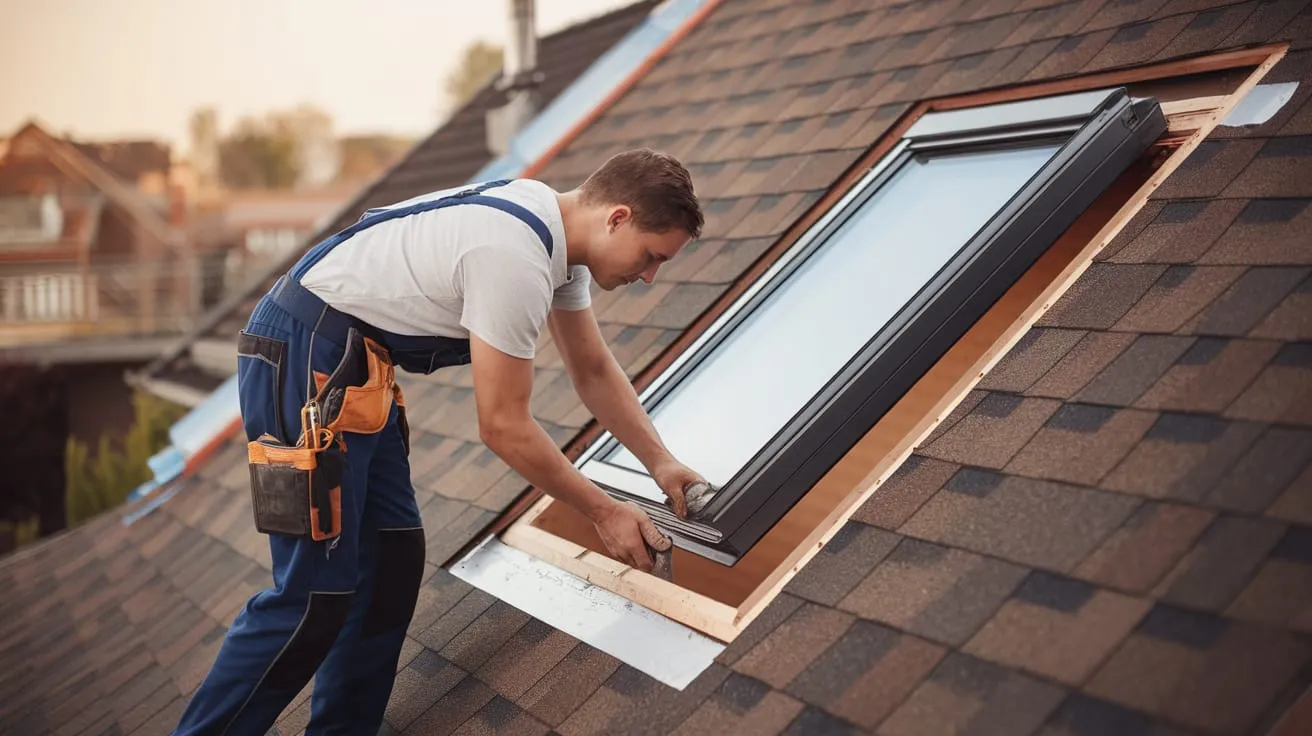
Step 1: Consultation. We visit the home, walk through the space, check the attic (if there is one), look at the roof from above, and talk through what you're trying to accomplish.
Placement matters more than most homeowners realize, a skylight 18 inches east or west changes the daylight pattern significantly. We pick the size and model, and we confirm the roof and framing are compatible. Step 2: Permit and ordering. Most East Bay jurisdictions require a permit for skylight installation under CRC R905.13. We pull it. We also order the unit and the matched flashing kit; VELUX units typically arrive in 5-10 business days. Step 3: Rough opening. We cut the opening from below, through the drywall, the insulation, and the roof deck. Any rafters that need cutting get properly headed off with doubled lumber and Simpson Strong-Tie hangers. We install GAF StormGuard ice and water shield around the entire opening perimeter before anything else goes on. Step 4: Curb or deck-mount setup. Deck-mount units (VELUX FCM, Fakro FTU) sit directly on the roof deck with a low profile. Curb-mount units sit on a pressure-treated wood curb that raises the skylight above the roof plane, standard for flat roofs, tile roofs, and some architectural applications. Step 5: Flashing kit installation. This is the part that determines whether it leaks for 30 years or for 3. The manufacturer's flashing kit includes apron flashing at the downslope edge, step flashing along both sides (interleaved with the shingle courses), and saddle flashing (sometimes called a cricket) at the uphill edge to divert water around the unit. Nothing is field-fabricated. Nothing is caulked into place as a substitute for proper metal. Step 6: Unit set and seal. The skylight sits onto the curb or deck frame, gets fastened per spec, and the factory weather seal engages. We don't handle the glass in the field, it's sealed at the factory and stays sealed. Step 7: Interior light shaft. The shaft from the roof deck to the ceiling is framed, insulated (critical for condensation control), drywalled, and finished. We can splay the shaft walls to spread light outward or keep them vertical for a focused beam, depending on what works for the room. Step 8: Cleanup and walkthrough. Magnetic nail sweep, tarp removal, interior dust containment broken down, and a walkthrough with you to confirm everything looks right.
Code Requirements
CRC R905.13 governs skylight installation, flashing, curb height, and attachment requirements. CRC R308 covers the glazing, Category II safety glazing (laminated or tempered) is required for skylights. Title 24 (California Energy Code) sets U-factor and SHGC limits; current code for most California climate zones requires U-factor ≤ 0.55 and SHGC ≤ 0.30 for skylights, and the VELUX and Fakro units we install meet or beat both numbers without upgrades. CRC R807 governs attic access and needs to be maintained when a skylight's rough opening reduces clearance.
And Chapter 7A of the California Building Code applies in WUI fire zones, parts of Oakland, Berkeley, Orinda, Moraga, Lafayette, Danville, Alamo, San Ramon, and the San Rafael hills, requiring Class A fire-rated assembly and ember-resistant construction at the curb and flashing. Most East Bay jurisdictions require a permit. Contra Costa County unincorporated goes through the ePermits Center in Martinez. Oakland, Berkeley, and the Alameda County cities permit through their own building departments. Fees typically run $150-$400 depending on city and scope. We handle the paperwork.
The One Thing I Want You to Remember
Most of the leaking skylights I've inspected over the years weren't failing because the skylight was bad.
They were failing because the original installer skipped the flashing kit and tried to caulk or tar the perimeter, or because they used a generic flashing assembly that didn't match the roof material, or because they reused old flashing from a previous unit during a replacement. Buy the manufacturer's flashing kit. Pay for it. Make sure whoever installs it uses it. If an installer tells you the kit is unnecessary or that they can fabricate something better on-site, walk away. We've been cleaning up after that exact conversation for decades.
East Bay Cities We Serve
Skylight installation across all 38 East Bay cities in our service area, with highest volume in Walnut Creek, Lafayette, Orinda, Alamo, Danville, Piedmont, Berkeley Hills, Montclair, Rockridge, and Oakland foothills neighborhoods where cathedral ceilings and mid-century designs create a lot of opportunity for overhead daylight.
Full city list on our locations page.
Free Skylight Consultation Call
(925) 722-4916 or request a consultation online.
We'll walk the property, look at the roof and framing, and give you an honest recommendation, including whether a skylight makes sense at all. No pressure, no upsell. C-39 licensed, BBB accredited, and based at 2310 Bates Ave #AA in Concord since 1988.
What Skylight Installation Includes
A skylight is only as good as its roof integration. Every unit we install gets a full flashing curb, step flashing on the upper and lower slopes plus a vent boot style collar where the curb meets the roof plane, so the penetration sheds water instead of funneling it. The curb is built on solid plywood or osb sheathing with new underlayment wrapped up the sides, and ice-and-water shield applied in the valleys and lower field as a second layer of defense. We also re-check the ridge vent balance: a skylight changes attic airflow, and a properly ventilated roof keeps the flashing from sweating. All work follows building code requirements for curb height and flashing coverage. The old unit and its debris go straight to the dumpster.
Roof System Details
Beyond the visible work, every skylight installation project on a roof touches the same system-level details. Valleys are flashed with corrosion-resistant metal so the heaviest water flow stays off the deck. Ice dams are addressed at the source, ice-and-water shield in the eaves and lower field plus balanced ridge vent and soffit vent airflow keeps the deck temperature even, so snowmelt doesn't refreeze at the eave and push water up under the shingles. The joist and rafter structure is checked for deflection before heavy materials go up. Gutter and downspout connections are confirmed at the eaves so the roof edge drains into the system instead of behind it, a roof and its gutters are one water-shedding assembly, and we treat them that way.
Quality & Materials Standards
Every material we install is specified to a standard, not just a price. Architectural shingles and three-tab shingle options are dimensional fiberglass-backed products with granulated mineral surfacing; standing-seam panel and corrugated panel metal roofs come in steel or aluminum with elastomeric coating options (including acrylic coating and silicone coating where the spec calls for them). TPO, EPDM, and built-up roof membranes are checked for tensile strength and coverage rate before they go up. Adhesive and roof cement are used where the membrane spec requires them, and fasteners are driven to the manufacturer's exact coverage rate, never guessed.
We also inspect for the failure modes that shorten roof life, and we're honest about what we find: blistering and blisters, buckling or warping, delamination and spalling, corrosion and erosion of metal, granulated loss, UV degradation, and deterioration that shows as flaking, cracking, or seepage at seams and eaves. Water that wicks up under a substrate rots sheathing and trusses; we fix the substrate, not the symptom. Drains, downspouts, and gutters are checked as part of the water path, a roof that drains is a roof that lasts.
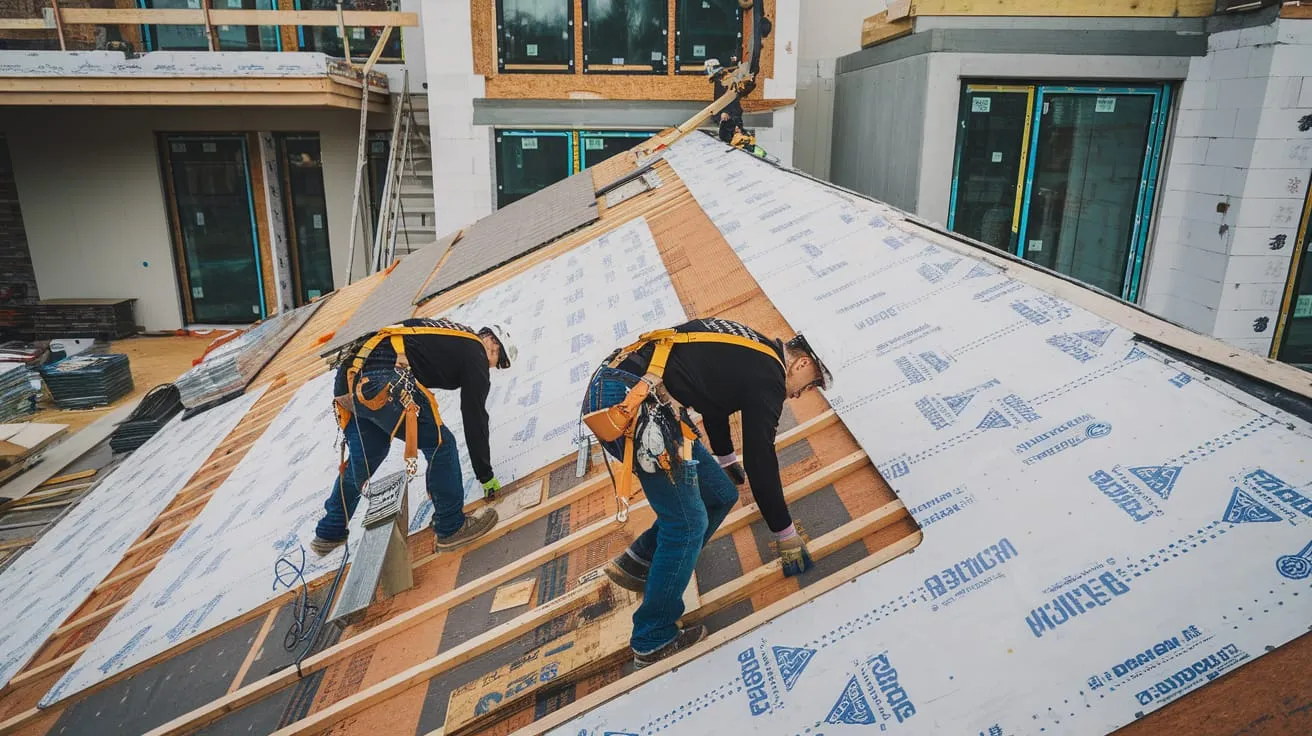
Storm response is built into our process: hail damage and wind damage assessments document every dent, dislodged shingle, and lifted flashing for the adjuster. We handle claim documentation, including the deductible line items, depreciation schedules, and supplement paperwork insurance companies require, so the scope of work is approved before the crew arrives, and a tarp protects the interior until the permanent repair is scheduled. Crews work to a written scope of work with scaffold and safety harness protocols on every steep roof.

Need skylight installation, velux & fakro certified | east bay roofers in the East Bay? Get a free estimate from a licensed contractor.
Skylight Costs
Tubular / Sun Tunnel
VELUX Sun Tunnel TMF/TGR or Solatube TDD. 10-14 inch reflective tube from roof dome to ceiling diffuser. No framing modification. Half-day install.
Get Free EstimateFixed Skylight
VELUX FCM or Fakro FTU deck-mount fixed skylight. Low-E laminated glass, manufacturer flashing kit, interior light shaft framed and finished. Full-day install.
Get Free EstimateVented Skylight
VELUX VS manual-vent or VSE electric-vent. Operable for passive ventilation and heat release. Remote control on electric models.
Get Free EstimateSolar-Powered Vented
VELUX VSS solar-powered fresh-air skylight with rain sensor auto-close. Qualifies for 30% federal solar tax credit under the IRA through 2032.
Get Free EstimateFrequently Asked Questions
Will a new skylight leak?
Not if it's installed with the manufacturer's flashing kit. The honest truth in this trade is that most skylight leaks we're called out to repair are flashing failures, not glass failures, and the vast majority of those are field-fabricated flashings that skipped the engineered kit. VELUX and Fakro both sell step-flashing, apron, and saddle-flashing kits designed specifically for each model and roof type. We install them. Always.
Can you install a skylight in any roof?
Most pitched roofs from 3:12 to 20:12 accept a standard deck-mount skylight. Flat or low-slope roofs need a curb-mounted skylight with a raised wood frame. Tile roofs are possible but more complicated and we'll confirm feasibility during the consultation. Framing usually requires cutting and headering one or two rafters, which is straightforward carpentry and doesn't affect the structural capacity when done correctly.
Do skylights qualify for a tax credit?
VELUX solar-powered fresh-air skylights (VSS series) and their solar-powered blinds qualify for the 30% federal residential clean energy credit under the Inflation Reduction Act, available through 2032. A $4,500 solar skylight installation nets a $1,350 credit. Fixed and manual-vent skylights don't qualify for the solar credit but may qualify for energy efficiency credits depending on U-factor and SHGC.
What about summer heat gain?
Modern skylights use low-E coated laminated glass that blocks 70-80% of solar heat while passing visible light. Title 24 (California's energy code) requires specific U-factor and SHGC ratings for skylights installed in California, and the units we install already meet those. For west and south-facing installations in hotter interior locations (Walnut Creek, Concord, Livermore), we recommend adding VELUX solar-powered blinds that auto-close at a set interior temperature.
What code requirements apply?
CRC R905.13 governs skylight installation, R308 covers glazing requirements (laminated or tempered glass), and Title 24 sets the energy performance. In WUI fire zones, the entire roofing assembly including skylight curbs must comply with Chapter 7A. Most East Bay jurisdictions require a permit for skylight installation or replacement, we pull it as part of the job.
What's the best time to install a skylight?
During a roof replacement is ideal, the flashing integrates seamlessly with new roofing material and there's no risk of disturbing existing shingles. For standalone installations, spring through early fall is best because we want dry weather during the 4-8 hour window when the roof deck is open. We install year-round when the forecast cooperates.
Get Your Free Roof Inspection
Call today for a no-obligation estimate from a licensed East Bay roofing contractor.
Call (925) 722-4916Credentials You Can Verify
Licensed & Insured
Fully licensed, bonded, and insured with workers' compensation on every job.
Certified & Factory-Trained
Factory-certified installers on every major product line, qualifying you for the strongest manufacturer warranties.
Warranty-Backed Work
10-year workmanship warranty plus up to 50-year manufacturer warranties on materials.
24/7 Emergency Service
Same-day emergency roof repair across the East Bay, with 24/7 live dispatch.
Locally Owned & Operated
Family-run since 1988, based in Concord. We don't subcontract, and we don't go anywhere.
Top Manufacturer Partners
Certified installers for GAF, Owens Corning, and CertainTeed roofing systems.
Get a free estimate from a licensed East Bay roofing contractor. Call (925) 722-4916
When a Skylight Isn't Worth It
If your roof is more than 15 years old and approaching replacement age, don't install a new skylight now. You'll pay for the flashing work twice, once with the skylight, again during the re-roof. Wait and add it during replacement. North-facing skylights give consistent cool light (good for studios, not so good for warmth). And if you've got a cathedral ceiling with no attic space, condensation management gets complicated and we'll talk through it before we cut anything.
Related Services
Roof Replacement
Adding or upgrading skylights during a re-roof is the most cost-effective timing.
Learn MoreWe Serve 38 East Bay Cities
From Concord to Fremont, Oakland to San Ramon, East Bay Roofers covers the entire East Bay with same-day emergency dispatch.